New to LastDodo?See how it works
New here? LastDodo is rated
99.2% positive in 728,990 shop reviews. Find out how it works
BuySellCatalogueCollection Wish list Forum
EN
NederlandsEnglishFrançaisDeutsch
Shopping cart of:
You have more shopping carts
View 9 shopping carts from other shops
Shopping cart

The shopping cart is currently empty.

Sign inFrequently Asked Questions
Sign in
StampsComic booksCoinsBooksMusicFilmPostcardsTrading cardsCigar bandsModel carsTea bags
All areas (75)
All areas
  • A
  • Album pictures(145,886)
  • Alcohol / beverages(8,276)
  • Audiovisual equipment(1,226)
  • Autographs(5,565)
  • B
  • Badges(4,476)
  • Banknotes(30,354)
  • Beer labels(83,648)
  • Beer mats(150,504)
  • Board games(19,296)
  • Bookmarks(3,904)
  • Books(495,405)
  • C
  • Calculators(1,702)
  • Cans / tins(9,741)
  • Caps and Pogs(19,972)
  • Car brochures(10,728)
  • Ceramics(5,587)
  • Cigar labels(292,245)
  • Clocks and alarm clocks(629)
  • Coins(105,196)
  • Collection albums(5,372)
  • Comic books(659,245)
  • Comic ex-libris and prints(43,710)
  • Creamer cup lids(24,241)
  • Crown Caps(8,966)
  • D
  • Dolls and bears(3,588)
  • Drawings / paintings(31,103)
  • DVD / Video / Blu-ray(96,250)
  • E
  • Enamel signs(832)
  • Entrance tickets(3,260)
  • F
  • Figures and statuettes(92,391)
  • Fossils(331)
  • G
  • Gift cards(27,294)
  • J
  • Jewellery(3,162)
  • Jigsaw puzzles(8,093)
  • K
  • Keychains(9,450)
  • Kitchenware & tableware(19,989)
  • L
  • Lighters(6,793)
  • M
  • Magazines / newspapers(293,248)
  • Maps and globes(3,021)
  • Markclips(33,868)
  • Match Programmes(5,703)
  • Matchcovers(102,999)
  • Minicards(18,851)
  • Model cars and scale model(81,972)
  • Model trains / Railway modelling(12,480)
  • N
  • Naturalia(7,977)
  • P
  • Perfins(13,758)
  • Perfume bottles(9,029)
  • Phone cards(112,806)
  • Photo and video cameras(5,854)
  • Picture stamps(8,734)
  • Pins and buttons(102,738)
  • Postcards(427,847)
  • Posters(11,427)
  • Prints / graphics(5,936)
  • R
  • Records and CDs(261,449)
  • Revenue stamps(6,334)
  • Rolling papers(3,743)
  • S
  • Securities and bonds(1,552)
  • Stamps(967,986)
  • Stationery(4,128)
  • Stickers(35,561)
  • Sugar sachets(65,108)
  • T
  • Tea bags(155,081)
  • Telephones(270)
  • Templates and molds(3,819)
  • Thimbles(2,706)
  • Tokens / Medals(24,482)
  • Toy soldiers(20,226)
  • Toys(14,277)
  • Trading cards(252,726)
  • V
  • Vases & flowerpots(3,521)
  • Video games(22,221)
  • W
  • Watches(3,136)
  • Wine(2,685)
  1. Home
  2. Catalogue
  3. Books
  4. Series / protagonists
  5. Judge Dee

Judge Dee books catalogue

220 items

Judge Dee (Judge Dee), written by Robert van Gulik, is based on the historical Di Renjie (630–700), chancellor of Empress Wu Zetian during the Tang Dynasty. A total of 16 novels and 8 short stories by Judge Dee were published.  More

Judge Dee

Rechter Tie

Written by Robert van Gulik, Judge Dee (Judge Dee) is based on the historical Di Renjie (630–700), who lived during the Tang Dynasty and served as a district magistrate early in his career. Besides being an astute detective, he was also famous as a great statesman, who played an important role in the domestic and foreign policy of the Chinese empire in the second half of his career. When the murderous Empress Wu (625-705) ascends the throne, a fierce battle develops between her and Judge Dee, who has since become Chairman of the Supreme Court and counselor to Her Majesty.

Robert van Gulik (1910 - 1967) worked as a diplomat for the Ministry of Foreign Affairs in various countries; such as Japan (Tokyo, 1935-1942) China (Chungking, 1943-1946), United States (Washington DC, 1947-1948), India (New Delhi, 1951-1953), India Lebanon (Beirut, 1956-1959), Malaysia (Kuala Lumpur, 1959-1962), As ambassador to Tokyo (1965-1967)

Van Gulik found in a bookstore in Tokyo the 18th century version of the Di Gong An novel (literally "Cases of Judge Dee"), an original story dealing with three cases simultaneously, which was unusual among Chinese mystery stories, a plot that lacked supernatural elements so that it could appeal to Western readers.

Van Gulik had taken the novel Di Gong An, about Di Renjie, with him when the Dutch legation was evacuated from Tokyo in 1942.

He translated it into English and had it published in 1949.

This 'folk novel' was written during the Ming dynasty (1368–1644) in China, set in earlier times, but full of anachronisms. The novel contains cultural elements from later dynasties, rather than from China's Tang Dynasty.

Robert van Gulik noted in his scholarly postscript: The present book is in fact a translation of only about half (31 of the 65 chapters). The Chinese book in Van Gulik's possession was entitled "Four Strange Cases of Empress Wu's Reign". Van Gulik obtained three editions of that book: an 18th century manuscript and two printed editions, published in Shanghai in 1903 and 1947 respectively. There were many differences between the various texts, with Van Gulik considering the 19th century version to be the best and basing his translation mainly on it.

Based on textual analysis, Van Gulik became convinced that the second part was a later addition, written by "a person with weak talents". "Part I is written in a fairly compact style and cleverly composed. In contrast, the style of Part II is verbose and repetitive, the plot is clumsy and the characters poorly drawn. Furthermore, while Part I is written with great restraint, Part II passages that are downright pornographic, for example where the relations of Empress Wu with the priest Huai-i are described." Moreover, Part II did not describe any detective investigation at all, but was mainly about judicial intrigues and power struggles - and thus did not serve Van Gulik's purpose of presenting Chinese crime fiction to Western readers.
For all these reasons, Van Gulik decided to translate only the first part.

Thanks to his translation of this largely forgotten work, Van Gulik became interested in Chinese detective fiction. He included an essay on the genre, suggesting that it was easy to imagine rewriting some of the ancient Chinese cases with modern readers in mind. Not long after, he himself tried to create a detective story in this sense. This became the book The Chinese Maze Murders (Labyrinth in Lang-fan), completed around 1950).

Thinking that the story would be more interesting to Japanese and Chinese readers, Van Gulik had it translated into Japanese by a friend (completed in 1951), and it was sold in Japan under the title Meiro-no-satsujin. With the book's success, Van Gulik produced a translation into Chinese, which was published in 1953 by a book publisher in Singapore. The reviews were good and Van Gulik wrote two more books, The Chinese Bell Murders (Bells of Kao-yang) and The Chinese Lake Murders (More of Mien-yuan), also with a view to Japanese and Chinese editions. Van Gulik then found a publisher for English versions of the stories (Mchael Joseph LTD, London) and the first version was published in 1957. Later books were written and published first in English and the translations came later.

The Japanese publisher of the Di Gong An novel and Meiro no satsujin (Labyrinth in Lang-fan) had requested a drawing of a naked woman for the cover. Van Gulik protested: in his opinion that was absolutely not appropriate for a classical Chinese novel. The publisher remarked wittily that he would have to look a little harder.
That became the beginning of an extensive investigation into eroticism in Chinese art.

Later in his life, Van Gulik devoted himself to the study of Imperial Chinese art and eroticism. He published two important works, 'Erotic color prints of the Ming period' and 'Sexual life in ancient China'.

Di Gong An contains 3 original illustrations, but also 6 illustrations and the cover design by Robert van Gulik in the style of the woodcuts from the Ming period (1368-1644).

He also found making the (often slightly erotic) illustrations himself interesting.
He mentions that he traced onto thin paper the Chinese examples he wanted to include in his own drawings, such as clothing, pieces of furniture, stylized trees or plants, and architectural elements.

In 1956 he published a translation of the T'ang-yin-pi-shih ("Parallel Cases from Under the Pear Tree"), a 13th-century casebook for district magistrates. He used many of the cases as plots in his novels (as he states in the postscripts of his novels).

Van Gulik also wrote some Judge Dee stories during the civil war in Lebanon (1958), when he was appointed Minister Plenipotentiary for the Middle East. The political situation is so dangerous that he sends his family back to The Hague. He writes another 'Rechter Tie', The Chinese Nail Murders (Nagels in Ning-Tsjo) with the vague idea of ending the series with this. But the success of the first novels changes the course of history.

Friends and even his daughter, Pauline, said he identified with Judge Dee. He lived the life of a mandarin who cultivated calligraphy, poems and paintings. When he began writing the stories in 1949, he was in a conservative and nostalgic mood, remarking, "Judge Dee, it's me."


In most of the novels, the (fictional) Judge Dee also fulfilled the role of district magistrate. Throughout Imperial Chinese history, the district magistrate was the link between the emperor and his people and was responsible for maintaining harmony among those under his charge. For crimes committed in his district, the magistrate is expected to solve the crimes and administer justice, hence his honorary title Judge.

Initially, Judge Dee is only assisted by his loyal clerk, Sergeant Hoong Liang, an old family servant. However, in Phantom in Foe-lai (The Chinese Gold Murders), which describes Tie's first appointment and first criminal cases, the judge encounters two highwaymen, euphemistically called "men of the green forest", Ma Joong and Chiao Tai, who try to rob, but are so impressed by his actions and character that they give up their criminal career and join his entourage on the spot. This encounter is told in a brief flashback passage in the original Di Gong An, which takes place when the two are long-serving loyal members of his entourage. A little later, in Meer van Mien-yuan (The Chinese Lake Murders), a third criminal, Tao Gan, a traveling confidence trickster and swindler, also joins in. Judge Dee ends his career in Murder in Canton and is promoted to the position of 'Head of the Metropolitan Court'

Judge Dee is of course responsible for deciding sentences and assessing guilt or innocence, although Van Gulik notes in the stories that all death sentences must be stated and decided by officials in the capital. One of the punishments he often faces is 'slow slicing', but when he is inclined to mercy, he orders the final, fatal cut to be made first, making the ceremony an anticlimax.


A total of 16 novels and 8 short stories by Judge Dee were published.

List of Judge Dee's stories In CHRONOLOGICAL order:
Indicating the year (before our era) and the district in which the story takes place.
“The short stories are in quotes”

In 'Judge Dee at Work' (Six cases for Judge Dee), Robert van Gulik provides a chronological overview of the various positions that Judge Dee holds, in his detective mysteries—both novels and short stories—in the context of Tie's career and also provides background information about the stories.
Based on this chronology we get the following overview:

0 “The Poisoned Bride (Dee Goong An)” - Year ?, district ?

(Judge Dee is a magistrate of Peng-lai (Penglai), a district in Shantung (Shandong) province on the north-eastern coast of China).
1 Phantom in Fu-lai - 663, Penglai
2 “Five auspicious clouds” 663, Penglai (published in: Five auspicious clouds)
3 “Murder and official hair-splitting” 663, Penglai (appeared in Six Cases for Judge Dee)
4 “He came with the rain” 663, Penglai (published in: Five Clouds of Fortune)
5 The Chinese lacquer screen - 664, Penglai

(Judge Dee is a magistrate of Han-yuan, a fictional district, on a lake, close to the capital or Chang-An)
6 Lake Mien-yuan - 666, Han-yuan
7 “The Murder at the Lotus Pond” 666, Han-yuan (appeared in Six Cases for Judge Dee)
8 The Ghost Monastery - 667, Han-yuan
9 “Four fingers”, 667, Han-yuan (Book Week Gift 1964) (published in: Five Lucky Clouds)
(English title: The Morning of the Monkey)

(Judge Dee is a magistrate of Poo-yang, a fictional prosperous district through which the Grand Canal of China runs (part of modern-day Jiangsu province).
10 Bells of Kao-yang - 668, Poo-yang
11 Necklace and gourd - 668, Poo-yang
12 “The Two Beggars” 668, Poo-yang (appeared in Six Cases for Judge Dee)
13“The Other Sword” 668, Poo-yang (appeared in Six Cases for Judge Dee)
14 The Red Pavilion - 668, Poo-yang
15 The Emperor's Pearl - 669, Poo-yang
16 Moon Festival Murder - 669, Poo-yang

(Judge Dee is a magistrate of Lan-fang, a fictional district on the western border of the Tang Chinese Empire).
17 Labyrinth in Lan-fang - 670, Lan-fang
18 The Ghost in the Temple - 670, Lan-fang
19 “The Emperor's Coffins” 670, Lan-fang (published in Six Cases for Judge Dee)
22 “Murder on New Year's Eve” 670, Lan-fang (appeared in Six Cases for Judge Dee)

21 Nagels in Ning-chow - 676, Pei-chow (a fictional district in northern China)
22 The Night of the Tiger - 676, Pei-chow

23 The Willow Pattern - 677, Chang-An (Judge Dee is Head of Court in the Imperial Capital Chang-An).

24 Murder in Canton - 681, Guangzhou (Judge Dee is Chief Judge of All China)


List of Judge Dee's stories, in order of first appearance:
(Indicating the year (BC) and the district in which the story takes place).

Robert van Gulik originally wrote the stories in the English language.

1949
Dee Goong An , An Ancient Chinese Detective Story
Celebrated Cases of Judge Dee An
Translated by RH van Gulik (from the Chinese original, Dee Goong An (lit. "Cases of Judge Dee”), an anonymous Chinese detective novel from the eighteenth century)
"Printed for the author by Toppan Printing Company Tokyo 1949".
The translation features nine drawings, three copies from old Chinese art, and six illustrations by the author.
(An early phase of Judge Dee's career. Not part of the later continuity).
Three stories:
"The Case of the Double Murder at Dawn"
"The Case of the Strange Corpse"
"The Case of the Poisoned Bride".
Dee is the newly appointed Magistrate of Chang-ping in the Province of Shantung. He has all four lieutenants on staff: Sgt. Hoong, Chiao Tai, Ma Joong, and Tao Gan.

DUTCH EDITION: The poisoned bride - Uitgeverij Elsevier, 1982

1956
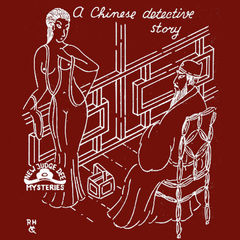
The Chinese Maze Murders 670, Lan-fang, A Chinese detective story suggested by three original ancient Chinese plots
W. VAN HOEVE LTD — THE HAGUE AND BANDUNG 1956
There is a version with a stamp: (Distributing agent: Gregory Lounz 11 East 45th street, New York 17 NY)
A version with a wrapper (black with white letters): AGATHA CHRISTIE says about The Chinese Maze Murders “I enjoyed the book immensely. The whole thing has great charm and freshness and I hope it will have a great success.”
Version with pasted-in strip: Uitgeverij W. van Hoeve 1957
“The case of the murder in the sealed room”
“The case of the hidden will”
“The case of the girl with the severed head”
Written in 1950, published in Japanese, Kodansha International 1951; Chinese translation, Nanyang Press 1953
Lan-fang is a fictional district on the western border of the Tang Chinese Empire. Given its name, location and role in the trade route to Khotan, it has a historical connection with Lanzhou.
DUTCH EDITION: Labyrinth in Lang-fan - Uitgeverij W. van Hoeve 1956

1958
The Chinese Bell Murders 668, Poo-yang - First published by MICHAEL JOSEPH LTD. 1958
Written between 1953 and 1956; Poo-yang, a fictional prosperous district through which the Grand Canal of China passes (part of modern-day Jiangsu province).
DUTCH EDITION: Bells of Kao-yang - Uitgeverij W. van Hoeve 1958

New Year's Eve in Lan-fang, A Judge Dee Story (32 pages) - Beirut, Lebanon 1958 (?)

1959
The Chinese Gold Murders 663, Penglai - First published by MICHAEL JOSEPH LTD. 1959
Tie's first appointment and criminal cases, he encounters two highwaymen, euphemistically called "men of the green forest", Ma Joong and Chiao Tai.
DUTCH EDITION: Phantom in Foe-lai - Uitgeverij W. van Hoeve 1958

The Chinese Lake Murders 666, Han-yuan, Three cases solved by Judge Dee - First published by MICHAEL JOSEPH LTD. 1960
Written between 1953 and 1956. Like Labyrint in Lang-fan, it was intended for a Japanese and Chinese audience, but Van Gulik decided to also publish it in English.
Han-yuan is a fictional district on the shore of a lake close to the capital Chang-An. Huan-Yuan (??) is an old name for modern Hancheng, a city in Shaanxi province.
DUTCH EDITION: Meer van Mien-yuan - Uitgeverij W. van Hoeve 1959

The Chinese Nail Murders 676, Pei-chow, Juge Dee's last three cases - First published by MICHAEL JOSEPH LTD. 1961
Pei-chow is a fictional district in northern China.
DUTCH EDITION: Nails in Ning-tsjo - Uitgeverij W. van Hoeve 1959

1961
The Haunted Monastery 667, Han-yuan - Publisher Art Printing Works, Kuala Lumpu 1961
(The London publisher Michael Joseph did not want to publish more than one title per year and therefore van Gulik decided to privately publish the stories The Haunted Monastery and The Red Pavilion at the Art Printing Works in Kuala Lumpur, 1961 and The Lacquer Screen in 1962, in a limited edition of 2000 copies)
While traveling, Judge Dee is forced to take shelter in a monastery.
DUTCH EDITION: The ghost monastery - Uitgeverij W. van Hoeve 1962

The Red Pavilion 668, Poo-yang - Publisher Art Printing Works, Kuala Lumpu 1961
Judge Dee becomes entangled in a web of lies, intrigues and sad stories in the world of prostitution during Imperial China.
DUTCH EDITION: The Red Pavilion - Uitgeverij W. van Hoeve 1961

DUTCH EDITION: Six Cases for Judge Dee - Uitgeverij W. van Hoeve 1961
“Murder and official hair-splitting”
“The Murder at the Lotus Pond”
“The Two Beggars”
“The Other Sword”
“The Emperor's Coffins”
“Murder on New Year's Eve”
( Judge Dee at Work , Eight Chinese Detective Stories - Heinemann, London 1967)

1962
The Lacquer Screen 664, Penglai - Publisher Art Printing Works, Kuala Lumpu 1962
Judge Dee and Chiao Tai join a gang of robbers 'undercover' to solve a case.
DUTCH EDITION: The Chinese lacquer screen - Uitgeverij W. van Hoeve 1962

1963
The Emperor's Pearl 669, Poo-yang - Heinemann, London 1963
Strange things are happening in an abandoned villa, there is a seemingly cursed Imperial treasure and a perverted idiot villain.
DUTCH EDITION: The Emperor's Pearl - Uitgeverij W. van Hoeve 1963

Murder in Canton 681, Guangzhou - Heinemann, London 1966
Judge Dee is head of the court in the imperial capital of Chang-An
DUTCH EDITION: Murder in Canton - Uitgeverij W. van Hoeve 1963

The Monkey and the Tiger , Two Chinese Detective Stories - Heinemann, London 1965
A short novel with two stories:
The Morning of the Monkey 667, Han-yuan (ENGLISH TITLE: Four Fingers)
The Night of the Tiger 676, Pei Chow
DUTCH EDITION: The Night of the Tiger - Uitgeverij W. van Hoeve (Kramers Pocket) 1963

1964
“Four fingers” (Boekenweekgeschenk 1964) (English title: The Morning of the Monkey)

1965
The Willow Pattern 677, Chang-An - Heinemann, London 1965
Judge Dee is the Lord Chief Justice in the Imperial capital of Chang-An.
DUTCH EDITION: The Willow Pattern - Uitgeverij W. van Hoeve (Kramers Pocket) 1966

1966
The Phantom of the Temple 670, Lan-fang - Heinemann, London 1966
Mysterious phantom haunting a Buddhist temple. 20 bars of gold missing, and the merchant's beautiful daughter.
DUTCH EDITION: The ghost in the temple - Uitgeverij W. van Hoeve (Kramers Pocket) 1968

1967
Judge Dee at Work , Eight Chinese Detective Stories - Heinemann, London 1967
—”Five Auspicious Clouds” 663, Penglai A short story from Judge Dee at Work.
"The Red Tape Murders" 663, Penglai A short story from Judge Dee at Work. Military murder at the army fortress.
—“He Came With the Rain” 663, Penglai A short story from Judge Dee at Work.
“The Murder on the Lotus Pond” 666, Han-yuan A short story from Judge Dee at Work.
"The Two Beggars" 668, Poo-yang A short story from Judge Dee at Work.
"The Wrong Sword" 668, Poo-yang A short story from Judge Dee at Work.
"The Coffins of the Emperor" 670, Lan-fang A short story from Judge Dee at Work.
"Murder on New Year's Eve" 670, Lan-fang A short story from Judge Dee at Work.

(DUTCH EDITION: Six Cases for Judge Dee - Uitgeverij W. van Hoeve 1961)
“Murder and official hair-splitting” 663, Penglai
“The Murder of the Lotus Pond” 666, Han-yuan
“The Two Beggars” 668, Poo-yang
“The Other Sword” 668, Poo-yang
“The Emperor's Coffins” 670, Lan-fang
“New Year's Eve Murder” 670, Lan-fang

Necklace and Calabash 668, Poo-yang - Heinemann, London 1967
Judge Dee is a magistrate of Poo-yang.
DUTCH EDITION: Necklace and gourd - Uitgeverij W. van Hoeve (Kramers Pocket) 1967
(The last Judge Dee novel that was published during Robert van Gulik's lifetime).

1968
Poets and Murder 669, Poo-yang, Strange Cases solved by Judge Dee - Heinemann, London 1968
During a festival in Chin-hwa, Judge Dee is the guest of a group of eminent scholars. A young girl is murdered and a beautiful poet is identified as the perpetrator.
DUTCH EDITION: Murder at the Moon Festival - Uitgeverij W. van Hoeve (Kramers Pocket) 1968

Five lucky clouds - Uitgeverij W. van Hoeve (Kramers Pocket) 1969
Contains 3 stories:
“Five auspicious clouds” 663, Penglai
“He came with the rain” 663, Penglai
“Four fingers” (Reprint book week gift 1964)


Judge Dee as a comic strip.

Robert van Gulik wrote a series of newspaper comics about Judge Dee from 1964 to 1967, which resulted in a total of 19 adventures. Four stories are original, the rest are adaptations of previously published novels.
The drawings were provided by Frits Kloezeman.
The first four were regular balloon dots, but the later fifteen had the more typical Dutch text block below the images.

Automatic translation Click here for the original text
Hide original text

Rechter Tie (Judge Dee), geschreven door Robert van Gulik, is gebaseerd op de historische Di Renjie (630–700), die leefde tijdens de Tang-dynastie en in het begin van zijn carrière als districtsmagistraat diende. Behalve als scherpzinnig detective, was hij ook beroemd als een groot staatsman, die in de tweede helft van zijn loopbaan een belangrijke rol speelde in de binnen- en buitenlandse politiek van het Chinese keizerrijk. Als de moordzuchtige keizerin Wu (625-705) de troon bestijgt, ontwikkelt er zich een hevige strijd tussen haar en rechter Tie, die ondertussen voorzitter geworden was van de Hoge Raad en raadsman van Hare Majesteit.

Robert van Gulik (1910 - 1967) werkte als diplomaat voor het Ministerie van Buitenlandse Zaken in diverse landen; zoals Japan (Tokio, 1935-1942) China (Tsjoengking ,1943-1946), Verenige Staten (Washington DC, 1947-1948), India (New Delhi, 1951-1953), India Libanon (Beirut, 1956-1959), Maleisië (Kuala Lumpur, 1959-1962), Als ambassadeur naar Tokyo (1965-1967)

Van Gulik vond in een boekwinkel in Tokio de 18e-eeuwse versie van de Di Gong An-roman (letterlijk "Cases of Judge Dee"), een origineel verhaal dat drie zaken tegelijkertijd behandelt, en dat was ongebruikelijk bij Chinese mysterie-verhalen, een plot dat bovennatuurlijk elementen ontbeerde, zodat het westerse lezers zou kunnen aanspreken.

Van Gulik had de roman Di Gong An, over Di Renjie, meegenomen toen de Nederlandse legatie in 1942 uit Tokio werd geëvacueerd.

Hij vertaalde het in het Engels en liet het in 1949 publiceren.

Tijdens de Ming-dynastie (1368–1644) in China werd deze 'volksroman' geschreven die zich afspeelt in vroegere tijden, maar vol anachronismen. De roman bevat culturele elementen uit latere dynastieën, in plaats van uit de Tang-dynastie in China.

Robert van Gulik merkte op in zijn wetenschappelijke naschrift: Het huidige boek is in feite een vertaling van slechts ongeveer de helft (31 van de 65 hoofdstukken). Het Chinees boek in Van Guliks bezit, was getiteld "Vier vreemde gevallen van keizerin Wu's regering". Van Gulik verkreeg drie edities van dat boek: een 18e?-eeuws manuscript en twee gedrukte edities, respectievelijk gepubliceerd in 1903 en 1947 in Shanghai. Er waren veel verschillen tussen de diverse teksten, waarbij Van Gulik de 19e-eeuwse versie als de beste beschouwde en zijn vertaling daar vooral op baseerde.

Op basis van tekstuele analyse raakte Van Gulik ervan overtuigd dat het tweede deel een latere toevoeging was, geschreven door "een persoon met zwakke talenten". "Deel I is geschreven in een vrij compacte stijl en slim gecomponeerd. De stijl van deel II is daarentegen uitgebreid en repetitief, de plot is onhandig en de karakters slecht getekend. Verder, terwijl deel I met grote terughoudendheid is geschreven, komen in deel II passages voor die ronduit pornografisch zijn, bijvoorbeeld waar de relaties van keizerin Wu met de priester Huai-i worden beschreven". Bovendien beschreef deel II helemaal geen detectiveonderzoek, maar ging het vooral over gerechtelijke intriges en machtsstrijd - en diende het dus niet Van Guliks doel om Chinese misdaadfictie aan westerse lezers te presenteren.

Om al deze redenen besloot Van Gulik alleen het eerste deel te vertalen.

Dankzij zijn vertaling van dit grotendeels vergeten werk raakte Van Gulik geïnteresseerd in Chinese detectivefictie. Hij voegde een essay toe over het genre, waarin hij suggereerde dat het gemakkelijk voor te stellen was om enkele van de oude Chinese casussen te herschrijven met het oog op moderne lezers. Niet lang daarna probeerde hij zelf een detectiveverhaal in deze zin te creëren. Dit werd het boek The Chinese Maze Murders (Labyrint in Lang-fan), voltooid rond 1950).

Omdat Van Gulik dacht dat het verhaal meer interessant zou zijn voor Japanse en Chinese lezers, liet hij het door een vriend in het Japans vertalen (voltooid in 1951), en het werd in Japan verkocht onder de titel Meiro-no-satsujin. Met het succes van het boek produceerde Van Gulik een vertaling in het Chinees, die in 1953 werd gepubliceerd door een boekenuitgever in Singapore. De recensies waren goed en van Gulik schreef nog twee boeken The Chinese Bell Murders (Klokken van Kao-yang) en The Chinese Lake Murders (Meer van Mien-yuan), ook met het oog op Japanse en Chinese edities. Vervolgens vond Van Gulik een uitgever voor Engelse versies van de verhalen (Mchael Joseph LTD, London) en de eerste versie werd gepubliceerd in 1957. Latere boeken werden eerst in het Engels geschreven en gepubliceerd en de vertalingen kwamen later.

De Japanse uitgever van de Di Gong An-roman en Meiro no satsujin (Labyrint in Lang-fan) had voor het omslag om een tekening van een naakte vrouw gevraagd. Van Gulik protesteerde: dat paste volgens hem absoluut niet bij een klassieke Chinese roman. De uitgever merkte besmuikt op dat hij dan maar eens wat beter moest gaan zoeken.

Dat werd het begin van een uitgebreid onderzoek naar de erotiek in de Chinese kunst.

Van Gulik wijdde zich later in zijn leven aan de studie van Keizerlijke Chinese kunst en erotiek Hij publiceerde twee belangrijke werken, ‘Erotic colour prints of the Ming period’ and ‘Sexual life in ancient China’.

Di Gong An bevat 3 originele illustraties, maar ook 6 illustraties en het omslagontwerp van Robert van Gulik in de stijl van de houtsnedes uit de Ming-periode (1368-1644).

Ook het zelf maken van de (vaak licht erotische) illustraties vond hij interessant.

Hij vermeldt dat hij op dun papier de Chinese voorbeelden overtrok die hij in zijn eigen tekeningen wilde opnemen, zoals kleding, meubelstukken, gestileerde bomen of planten en architectonische elementen.

In 1956 publiceerde hij een vertaling van de T'ang-yin-pi-shih ("Parallel Cases from Under the Pear Tree"), een 13e-eeuws casusboek voor districtsmagistraten. Hij gebruikte veel van de gevallen als plots in zijn romans (zoals hij stelt in de naschriften van zijn romans).

Van Gulik schreef ook enkele Rechter Tie verhalen tijdens de burgeroorlog in Libanon (1958), toen hij daar als Gevolmachtigd minister voor het Midden-Oosten aangesteld was. De politieke situatie is zo gevaarlijk dat hij zijn gezin terug naar Den Haag stuurt. Hij schrijft een volgende 'Rechter Tie', The Chinese Nail Murders (Nagels in Ning-Tsjo) met het vage idee de serie hiermee te beëindigen. Maar het succes van de eerste romans laat de geschiedenis anders lopen.

Vrienden en zelfs zijn dochter, Pauline, zeiden dat hij zich identificeerde met Rechter Tie. Hij leefde het leven van een mandarijn die kalligrafie, gedichten en schilderijen cultiveerde. Toen hij in 1949 begon met het schrijven van de verhalen, was hij in een conservatieve en nostalgische bui en merkte hij op: "Rechter Dee, ik ben het".


In de meeste van de romans vervulde de (fictieve) Rechter Tie ook de rol van districtsmagistraat. Gedurende de keizerlijke Chinese geschiedenis was de districtsmagistraat de schakel tussen de keizer en zijn volk en was hij verantwoordelijk voor het handhaven van de harmonie onder degenen onder zijn hoede. Voor misdaden gepleegd in zijn district wordt van de magistraat verwacht dat hij de misdaden oplost en gerechtigheid toepast, vandaar zijn eretitel Rechter.

Aanvankelijk wordt Rechter Tie alleen bijgestaan door zijn trouwe klerk, sergeant Hoong Liang, een oude familiedienaar. In Fantoom in Foe-lai (The Chinese Gold Murders), waarin Tie’s eerste benoeming en eerste strafzaken worden beschreven, ontmoet de rechter echter twee struikrovers, eufemistisch "mannen van het groene bos" genoemd, Ma Joong en Chiao Tai, die hem proberen te beroven, maar zo onder de indruk zijn van zijn daden en karakter dat ze hun criminele carrière opgeven en zich ter plekke bij zijn gevolg voegen. Deze ontmoeting wordt verteld in een korte flashback-passage in de originele Di Gong An, die plaatsvindt wanneer de twee al lang dienende loyale leden van zijn gevolg zijn. Even later, in Meer van Mien-yuan (The Chinese Lake Murders), doet een derde crimineel, Tao Gan, een rondreizende vertrouwensbedrieger en oplichter, eveneens mee. Rechter Dee beëindigt zijn carrière in Moord in Canton en wordt gepromoveerd tot de functie van ‘Hoofd van het hoofdstedelijke gerechtshof’

Rechter Tie is uiteraard verantwoordelijk voor het beslissen over straffen en voor het beoordelen van schuld of onschuld, hoewel Van Gulik in de verhalen opmerkt dat alle doodstraffen moeten worden vermeld en beslist door ambtenaren in de hoofdstad. Een van de straffen waarmee hij vaak te maken krijgt, is ‘slow slicing’, maar als hij tot genade neigt, geeft hij opdracht om eerst de laatste, fatale snede te maken, waardoor de ceremonie een anticlimax wordt.


In totaal verschenen er 16 romans en 8 korte verhalen van Rechter Tie.

Lijst met de verhalen van Rechter Tie In CHRONOLOGISCHE volgorde:

Met vermelding van het jaar (voor onze jaartelling) en het district waarin het verhaal zich afspeelt.

“De korte verhalen staan tussen aanhalingstekens”

In ‘Judge Dee at Work’ (Zes zaken voor Rechter Tie) geeft Robert van Gulik een Chronologisch overzicht over de diverse posten die Rechter Tie bekleedt, in zijn detective mysteries—zowel de romans als de korte verhalen—in de context van Tie's carrière en geeft ook achtergrond informatie over de verhalen.

Op de basis van deze chronologie krijgen we het volgende overzicht:

0 “De vergiftigde bruid (Dee Goong An)” - Jaar ?, district ?

(Rechter Tie is magistraat van Peng-lai (Penglai), een district in de Shantung (Shandong) provincie aan de noord-oostelijke kust van China).

1 Fantoom in Foe-lai - 663, Penglai

2 ”Vijf gelukbrengende wolken” 663, Penglai (verscheen in: Vijf gelukbrengende wolken)

3 “Moord en ambtelijke haarkloverij” 663, Penglai (verscheen in Zes Zaken voor Rechter Tie)

4 ”Hij kwam met de regen” 663, Penglai (verscheen in: Vijf gelukbrengende wolken)

5 Het Chinese lakscherm - 664, Penglai

(Rechter Tie is magistraat van Han-yuan, een fictief district, aan een meer, dicht bij de hoofdstad of Chang-An)

6 Meer van Mien-yuan - 666, Han-yuan

7 “De moord op de lotusvijver” 666, Han-yuan (verscheen in Zes Zaken voor Rechter Tie)

8 Het spookklooster - 667, Han-yuan

9 “Vier vingers”, 667, Han-yuan (boekenweekgeschenk 1964) (verscheen in: Vijf gelukbrengende wolken)

(Engelse titel: The Morning of the Monkey)

(Rechter Tie is magistraat van Poo-yang, een fictief welvarend district waardoor het Grote Kanaal van China loopt (een gedeelte van de hedendaagse Jiangsu provincie).

10 Klokken van Kao-yang - 668, Poo-yang

11 Halssnoer en kalebas - 668, Poo-yang

12 “De twee bedelaars” 668, Poo-yang (verscheen in Zes Zaken voor Rechter Tie)

13“Het andere zwaard” 668, Poo-yang (verscheen in Zes Zaken voor Rechter Tie)

14 Het rode paviljoen - 668, Poo-yang

15 De parel van de keizer - 669, Poo-yang

16 Moord op het maanfeest - 669, Poo-yang

(Rechter Tie is magistraat van Lan-fang, een fictief district aan de westelijke grens van het Tang Chinese rijk).

17 Labyrint in Lan-fang - 670, Lan-fang

18 Het spook in de tempel - 670, Lan-fang

19 “De doodskisten van de keizer” 670, Lan-fang (verscheen in Zes Zaken voor Rechter Tie)

22 “Moord op oudejaarsavond” 670, Lan-fang (verscheen in Zes Zaken voor Rechter Tie)

21 Nagels in Ning-tsjo - 676, Pei-chow (een fictief district in het noorden van China)

22 De nacht van de tijger - 676, Pei-chow

23 Het wilgenpatroon - 677, Chang-An (Rechter Tie is Hoofd van het gerechtshof in de keizerlijke hoofdstad Chang-An).

24 Moord in Canton - 681, Guangzhou (Rechter Tie is Hoofdrechter van heel China)


Lijst met de verhalen van Rechter Tie, in volgorde van eerste verschijning:

(Met vermelding van het jaar (voor onze jaartelling) en het district waarin het verhaal zich afspeelt).

Robert van Gulik schreef de verhalen oorspronkelijk in de Engelse taal.

1949

Dee Goong An, An Ancient Chinese Detective Story

Celebrated Cases of Judge Dee An

Translated by R. H. van Gulik (from the Chinese original, Dee Goong An (lit. "Cases of Judge Dee”), an anonymous Chinese detective novel from the eighteenth century)

"Printed for the author by Toppan Printing Company Tokyo 1949".

The translation features nine drawings, three copies from old Chinese art, and six illustrations by the author.

(An early phase of Judge Dee's career. Not part of the later continuity).

Three stories:

"The Case of the Double Murder at Dawn"

"The Case of the Strange Corpse"

"The Case of the Poisoned Bride".

Dee is the newly appointed Magistrate of Chang-ping in the Province of Shantung. He has all four lieutenants on staff: Sgt. Hoong, Chiao Tai, Ma Joong, and Tao Gan.

NEDERLANDSE UITGAVE: De vergiftigde bruid - Uitgeverij Elsevier, 1982

1956

The Chinese Maze Murders 670, Lan-fang, A Chinese detective story suggested by three original ancient Chinese plots

W. VAN HOEVE LTD — THE HAGUE AND BANDUNG 1956

Er is een versie met een stempel: (Distributing agent: Gregory Lounz 11 East 45th street, New York 17 N. Y.)

Een versie met een wikkel (zwart met witte letters): AGATHA CHRISTIE says about The Chinese Maze Murders “I enjoyed the book immensely. The whole thing has great charm en freshness and I hope it will have a great success”.

Versie met ingeplakt strookje: Uitgeverij W. van Hoeve 1957

“The case of the murder in the sealed room”

“The case of the hidden testament”

“The case of the girl with the severed head”

Geschreven in 1950, gepubliceerd in het Japans, Kodansha International 1951; Chinese vertaling, Nanyang Press 1953

Lan-fang is een fictief district aan de westelijke grens van het Tang Chinese rijk. Gezien de naam, lokatie location en de role rol in de handelsroute naar Khotan, heeft het een historisch verband met Lanzhou.

NEDERLANDSE UITGAVE: Labyrint in Lang-fan - Uitgeverij W. van Hoeve 1956

1958

The Chinese Bell Murders 668, Poo-yang - First published by MICHAEL JOSEPH LTD. 1958

Geschreven tussen 1953 en 1956; Poo-yang, een fictief welvarend district waardoor het Grote Kanaal van China loopt (een gedeelte van de hedendaagse Jiangsu provincie).

NEDERLANDSE UITGAVE: Klokken van Kao-yang - Uitgeverij W. van Hoeve 1958

New Year’s Eve in Lan-fang, A Judge Dee Story (32 pagina’s) - Beirut, Libanon 1958 (?)

1959

The Chinese Gold Murders 663, Penglai - First published by MICHAEL JOSEPH LTD. 1959

Tie’s eerste benoeming en strafzaken, hij ontmoet twee struikrovers, eufemistisch "mannen van het groene bos" genoemd, Ma Joong en Chiao Tai.

NEDERLANDSE UITGAVE: Fantoom in Foe-lai - Uitgeverij W. van Hoeve 1958

The Chinese Lake Murders 666, Han-yuan, Three cases solved by Judge Dee - First published by MICHAEL JOSEPH LTD. 1960

Geschreven tussen 1953 en 1956. Zoals bij Labyrint in Lang-fan was het bedoeld voor een Japans en Chinees publiek, maar van Gulik besloot het ook in het Engels te publiceren.

Han-yuan is een fictief district aan de oever van een meer dicht bij de hoofdstad Chang-An. Huan-Yuan (??) is een oude naam voor het moderne Hancheng, een stad in de Shaanxi provincie.

NEDERLANDSE UITGAVE: Meer van Mien-yuan - Uitgeverij W. van Hoeve 1959

The Chinese Nail Murders 676, Pei-chow, Juge Dee’s last three cases - First published by MICHAEL JOSEPH LTD. 1961

Pei-chow is een fictief district in het noorden van China.

NEDERLANDSE UITGAVE: Nagels in Ning-tsjo - Uitgeverij W. van Hoeve 1959

1961

The Haunted Monastery 667, Han-yuan - Uitgeverij Art Printing Works, Kuala Lumpu 1961

(De Londense uitgever Michael Joseph wilde niet meer dan één titel per jaar uitgeven en daarom besloot van Gulik de verhalen The Haunted Monastery and The Red Pavilion privé uit te geven bij de Art Printing Works in Kuala Lumpur, 1961 en The Lacquer Screen in 1962, in een gelimiteerde editie van 2000 exemplaren)

Op reis is Rechter Tie is genoodzaakt onderdak te nemen in een klooster.

NEDERLANDSE UITGAVE: Het spookklooster - Uitgeverij W. van Hoeve 1962

The Red Pavilion 668, Poo-yang - Uitgeverij Art Printing Works, Kuala Lumpu 1961

Rechter Tie raakt verstrikt in een web van leugens, intriges en trieste verhalen in de wereld van de prostitutie tijdens het keizerlijke China.

NEDERLANDSE UITGAVE: Het Rode Paviljoen - Uitgeverij W. van Hoeve 1961

NEDERLANDSE UITGAVE: Zes Zaken voor Rechter Tie - Uitgeverij W. van Hoeve 1961

“Moord en ambtelijke haarkloverij”

“De moord op de lotusvijver”

“De twee bedelaars”

“Het andere zwaard”

“De doodskisten van de keizer”

“Moord op oudejaarsavond”

(Judge Dee at Work, Eight Chinese Detective Stories - Heinemann, London 1967)

1962

The Lacquer Screen 664, Penglai - Uitgeverij Art Printing Works, Kuala Lumpu 1962

Rechter Tie en Chiao Tai sluiten zich ‘undercover’ aan bij een roversbende om een zaak op te lossen.

NEDERLANDSE UITGAVE: Het Chinese lakscherm - Uitgeverij W. van Hoeve 1962

1963

The Emperor's Pearl 669, Poo-yang - Heinemann, London 1963

Er gebeuren vreemde dingen in een verlaten villa, er is een schijnbaar vervloekte Keizerlijke schat en een perverse idiote slechterik.

NEDERLANDSE UITGAVE: De Parel van de Keizer - Uitgeverij W. van Hoeve 1963

Murder in Canton 681, Guangzhou - Heinemann, London 1966

Rechter Tie is Hoofd van het gerechtshof in de keizerlijke hoofdstad Chang-An

NEDERLANDSE UITGAVE: Moord in Canton - Uitgeverij W. van Hoeve 1963

The Monkey and the Tiger, Two Chinese Detective Stories - Heinemann, London 1965

A short novel with two stories:

The Morning of the Monkey 667, Han-yuan (NEDERLANDSE TITEL: Vier vingers)

The Night of the Tiger 676, Pei-chow

NEDERLANDSE UITGAVE: De nacht van de tijger - Uitgeverij W. van Hoeve (Kramers Pocket) 1963

1964

“Vier vingers” (Boekenweekgeschenk 1964) (Engelse titel: The Morning of the Monkey)

1965

The Willow Pattern 677, Chang-An - Heinemann, London 1965

Judge Dee is the Lord Chief Justice in the Imperial capital of Chang-An.

NEDERLANDSE UITGAVE: Het Wilgenpatroon - Uitgeverij W. van Hoeve (Kramers Pocket) 1966

1966

The Phantom of the Temple 670, Lan-fang - Heinemann, London 1966

Mysterious phantom haunting a Buddhist temple. 20 bars of gold missing, and the merchant's beautiful daughter.

NEDERLANDSE UITGAVE: Het spook in de tempel - Uitgeverij W. van Hoeve (Kramers Pocket) 1968

1967

Judge Dee at Work, Eight Chinese Detective Stories - Heinemann, London 1967

—”Five Auspicious Clouds" 663, Penglai A short story from Judge Dee at Work.

"The Red Tape Murders" 663, Penglai A short story from Judge Dee at Work. Military murder at the army fortress.

—“He Came With the Rain" 663, Penglai A short story from Judge Dee at Work.

"The Murder on the Lotus Pond" 666, Han-yuan A short story from Judge Dee at Work.

"The Two Beggars" 668, Poo-yang A short story from Judge Dee at Work.

"The Wrong Sword" 668, Poo-yang A short story from Judge Dee at Work.

"The Coffins of the Emperor" 670, Lan-fang A short story from Judge Dee at Work.

"Murder on New Year's Eve" 670, Lan-fang A short story from Judge Dee at Work.

(NEDERLANDSE UITGAVE: Zes Zaken voor Rechter Tie - Uitgeverij W. van Hoeve 1961)

“Moord en ambtelijke haarkloverij” 663, Penglai

“De moord op de lotusvijver” 666, Han-yuan

“De twee bedelaars” 668, Poo-yang

“Het andere zwaard” 668, Poo-yang

“De doodskisten van de keizer” 670, Lan-fang

“Moord op oudejaarsavond” 670, Lan-fang

Necklace and Calabash 668, Poo-yang - Heinemann, London 1967

Rechter Tie is magistraat van Poo-yang.

NEDERLANDSE UITGAVE: Halssnoer en kalebas - Uitgeverij W. van Hoeve (Kramers Pocket) 1967

(De laatste Rechter Tie roman die nog tijdens het leven van Robert van Gulik verscheen).

1968

Poets and Murder 669, Poo-yang, Strange Cases solved by Judge Dee - Heinemann, London 1968

Tijdens een festival in Chin-hwa is Rechter Tie de gast van een groep eminente geleerden. Een jong meisje wordt vermoord en als dader wijst men een mooie dichteres aan.

NEDERLANDSE UITGAVE: Moord op het Maanfeest - Uitgeverij W. van Hoeve (Kramers Pocket) 1968

Vijf gelukbrengende wolken - Uitgeverij W. van Hoeve (Kramers Pocket) 1969

Bevat 3 verhalen:

“Vijf gelukbrengende wolken” 663, Penglai

“Hij kwam met de regen” 663, Penglai

“Vier vingers” (Herdruk boekenweekgeschenk 1964)


Rechter Tie als stripverhaal.

Robert van Gulik schreef van 1964 tot 1967 een reeks krantenstrips over Rechter Tie, die in totaal 19 avonturen opleverde. Vier verhalen zijn origineel, daarna zijn het bewerkingen van de reeds verschenen romans.

De tekeningen werden verzorgd door Frits Kloezeman.

De eerste vier waren gewone ballon-stips, maar de latere vijftien hadden het meer typisch Nederlandse tekstblok onder de afbeeldingen.


Number of books
220
Number of related items
0
Oldest item
Dee Goong An (1949)
Latest item
Het spookklooster (2015)
Most expensive item
The Chinese Maze Murders (€ 75.00)
Date of entry:November 16, 2023 16:48by:Dick-Moby
Last updated :January 08, 2024 10:29by:Dick-Moby

Judge Dee books catalogue
  • 1
  • 2
  • 3
  • 4
  • >
220 selected
Dee Goong An
Dee Goong An
  • 1949
Meiro no satsujin
Meiro no satsujin
  • 1951
The Chinese Maze Murders
€ 
75
The Chinese Maze Murders
  • 1956
  • 1
Labyrint in Lan-fang
  • 1957
  • 1
Labyrinth in Lan-fang
€ 
35
Labyrinth in Lan-fang
  • 1957
  • 1
The Chinese Bell Murders
  • 1958
  • 1
Fantoom in Foe-Lai
€ 
6
.
00
Fantoom in Foe-Lai
  • 1958
  • 2
Klokken van Kao-yang
€ 
5
.
00
Klokken van Kao-yang
  • 1958
  • 3
New Year’s Eve in Lan-fang
  • 1958
Oudejaarsavond in Lan-fang
  • 1958
The Chinese Gold Murders
  • 1959
  • 2
The Chinese gold murders
€ 
3
.
00
The Chinese gold murders
  • 1959
  • 3
Meer van Mien-yuan
€ 
6
.
00
Meer van Mien-yuan
  • 1959
  • 4
Labyrint in Lan-fang
  • 1960
  • 1
Labyrinth in Lan-fang
€ 
3
.
20
Labyrinth in Lan-fang
  • 1960
  • 1
Klokken van Kao-yang
€ 
5
.
00
Klokken van Kao-yang
  • 1960
  • 3
The Chinese Lake Murders
  • 1960
  • 3
Nagels in Ning-tsjo
Nagels in Ning-tsjo
  • 1960
  • 5
Het Rode Paviljoen
€ 
25
.
00
Het Rode Paviljoen
  • 1961
  • 1
The Haunted Monastery
  • 1961
  • 1
The Red Pavilion
The Red Pavilion
  • 1961
  • 2
The Chinese Nail Murders
  • 1961
  • 4
Zes Zaken voor Rechter Tie
€ 
5
.
00
Zes Zaken voor Rechter Tie
  • 1961
  • 6
Zes Zaken voor Rechter Tie
  • 1961
  • 6
The Chinese Nail Murders
  • 1961
  • 1219 G
Fantoom in Foe-Lai
€ 
5
.
00
Fantoom in Foe-Lai
  • 1962
  • 2
Het spookklooster
€ 
10
.
00
Het spookklooster
  • 1962
  • 2
The Red Pavilion
The Red Pavilion
  • 1962
  • 2
Het Chinese lakscherm
€ 
12
.
50
Het Chinese lakscherm
  • 1962
  • 3
The Lacquer Screen
The Lacquer Screen
  • 1962
  • 3
Meer van Mien-yuan
€ 
10
.
00
Meer van Mien-yuan
  • 1962
  • 4
The Chinese Maze Murders
  • 1962
  • 5
The Emperor's Pearl
The Emperor's Pearl
  • 1963
  • 1
The Haunted Monastery
  • 1963
  • 2
De Parel van de Keizer
€ 
12
.
50
De Parel van de Keizer
  • 1963
  • 4
Moord in Canton
€ 
15
.
00
Moord in Canton
  • 1963
  • 5
De nacht van de tijger
€ 
3
.
00
De nacht van de tijger
  • 1963
  • 23
De Nacht van de Tijger
€ 
2
.
50
De Nacht van de Tijger
  • 1963
  • 48
Het rode paviljoen
€ 
5
.
00
Het rode paviljoen
  • 1964
  • 1
Het spookklooster
€ 
5
.
00
Het spookklooster
  • 1964
  • 2
Het Chinese lakscherm
€ 
3
.
50
Het Chinese lakscherm
  • 1964
  • 3
The Lacquer Screen
The Lacquer Screen
  • 1964
  • 3
De Parel van de Keizer
€ 
5
.
00
De Parel van de Keizer
  • 1964
  • 4
The Red Pavilion
The Red Pavilion
  • 1964
  • 4
Moord in Canton
€ 
5
.
50
Moord in Canton
  • 1964
  • 5
Nagels in Ning-tsjo
€ 
15
.
00
Nagels in Ning-tsjo
  • 1964
  • 5
Vier vingers
€ 
2
.
50
Vier vingers
  • 1964
The Willow Pattern
The Willow Pattern
  • 1965
  • 5
The Monkey and the Tiger
  • 1965
  • 6
Labyrinth in Lan-Fang
€ 
5
.
00
Labyrinth in Lan-Fang
  • 1965
  • 12
Zes zaken voor Rechter Tie
€ 
5
.
00
Zes zaken voor Rechter Tie
  • 1965
  • 17
Les débuts du juge Ti
  • 1965
The Willow Pattern
The Willow Pattern
  • 1965
The Phantom of the Temple
  • 1966
  • 7
Murder in Canton
Murder in Canton
  • 1966
  • 8
Het Wilgenpatroon
€ 
6
.
00
Het Wilgenpatroon
  • 1966
  • 22 a
Het Wilgenpatroon
€ 
5
.
00
Het Wilgenpatroon
  • 1966
  • 22 b
Den røde pavilion
Den røde pavilion
  • 1966
The Chinese Nail Murders
€ 
4
.
00
The Chinese Nail Murders
  • 1966
The Emperor's Pearl
€ 
5
.
00
The Emperor's Pearl
  • 1966
  • Get to know us
  • About LastDodo
  • Catalogue
  • Buy
  • Sell
  • Subscriptions
  • Help
  • How does it work?
  • Frequently Asked Questions
  • Contact
  • Forum
  • Return and refund policy
  • Explore
  • Stamps buy and sell
  • Comic books buy and sell
  • Coins buy and sell
  • Books buy and sell
  • Music buy and sell
  • Film buy and sell
  • Postcards buy and sell
  • Trading cards buy and sell
  • Cigar bands buy and sell
  • Model cars buy and sell
© 2026 LastDodo
Terms of usePrivacy policyCookie policy