New to LastDodo?See how it works
New here? LastDodo is rated
99.2% positive in 736,510 shop reviews. Find out how it works
BuySellCatalogueCollection Wish list Forum
EN
NederlandsEnglishFrançaisDeutsch
Shopping cart of:
You have more shopping carts
View 9 shopping carts from other shops
Shopping cart

The shopping cart is currently empty.

Sign inFrequently Asked Questions
Sign in
StampsComic booksCoinsBooksMagazinesFiguresBanknotesPostcardsModel carsMusicFilm
All areas (76)
All areas
  • A
  • Album pictures(146,287)
  • Alcohol / beverages(8,438)
  • Audiovisual equipment(1,226)
  • Autographs(5,565)
  • B
  • Badges(4,501)
  • Banknotes(30,607)
  • Beer labels(84,377)
  • Beer mats(151,059)
  • Board games(19,395)
  • Bookmarks(3,931)
  • Books(497,333)
  • C
  • Calculators(1,702)
  • Cans / tins(9,787)
  • Caps and Pogs(19,976)
  • Car brochures(10,735)
  • Ceramics(5,595)
  • Cigar labels(292,878)
  • Clocks and alarm clocks(629)
  • Coins(105,330)
  • Collection albums(5,523)
  • Comic books(661,481)
  • Comic ex-libris and prints(44,053)
  • Creamer cup lids(24,243)
  • Crown Caps(9,105)
  • D
  • Dolls and bears(3,635)
  • Drawings / paintings(31,303)
  • DVD / Video / Blu-ray(96,971)
  • E
  • Enamel signs(840)
  • Entrance tickets(3,274)
  • F
  • Figures and statuettes(92,624)
  • Fossils(331)
  • G
  • Gift cards(27,296)
  • J
  • Jewellery(3,118)
  • Jigsaw puzzles(8,176)
  • K
  • Keychains(9,474)
  • Kitchenware & tableware(20,180)
  • L
  • LEGO(8,282)
  • Lighters(6,836)
  • M
  • Magazines / newspapers(294,757)
  • Maps and globes(3,042)
  • Markclips(33,943)
  • Match Programmes(5,703)
  • Matchcovers(104,115)
  • Minicards(18,871)
  • Model cars and scale model(82,373)
  • Model trains / Railway modelling(12,484)
  • N
  • Naturalia(8,184)
  • P
  • Perfins(14,284)
  • Perfume bottles(9,038)
  • Phone cards(112,816)
  • Photo and video cameras(5,856)
  • Picture stamps(8,783)
  • Pins and buttons(103,575)
  • Postcards(431,704)
  • Posters(11,533)
  • Prints / graphics(5,687)
  • R
  • Records and CDs(262,016)
  • Revenue stamps(6,345)
  • Rolling papers(3,750)
  • S
  • Securities and bonds(1,552)
  • Stamps(971,828)
  • Stationery(4,162)
  • Stickers(35,650)
  • Sugar sachets(65,492)
  • T
  • Tea bags(155,902)
  • Telephones(271)
  • Templates and molds(3,819)
  • Thimbles(2,706)
  • Tokens / Medals(24,792)
  • Toy soldiers(20,289)
  • Toys(6,017)
  • Trading cards(253,380)
  • V
  • Vases & flowerpots(3,531)
  • Video games(22,261)
  • W
  • Watches(3,139)
  • Wine(2,688)
  1. Home
  2. Catalogue
  3. Books
  4. Authors
  5. Dalmiro A. Saenz

Dalmiro A. Saenz books catalogue

2 items

Dalmiro Antonio Saenz started his literary activity quite early and started publishing when he was 30 years old, after traveling by ship via Patagonia for several seasons.  More

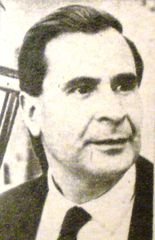
Dalmiro A. Saenz

Saenz, Dalmiro A.

Dalmiro Antonio Saenz started his literary activity quite early and started publishing when he was 30 years old, after traveling by ship via Patagonia for several seasons. He settled there for almost 15 years, culminating in his first storybook: "Setenta veces siete", which won him the prestigious prize of the Emecé publishing house. The book became a bestseller, based on a vision that is violent and erotic and with moral questions about religion. That is what would become the hallmark of Sáenz for several years. The critics agree that a religious thread runs through his stories; either by one of his characters or as in "Cristo de Pie" where religiosity quarrels with established religion as opposed to the individual dialogue that the character of God has. Later he took part in the big screen adaptation of the script of two stories from "Setenta Veces Siete" for the movie of the same name directed by Leopoldo Torre Nilson (1962) starring Isabel Sarli, Francisco Rabal, Jardel Filho and Nelly Prono. After this film, Sáenz won the Award of LIFE Magazine in Spanish, in 1963, with his storybook "No".

In the same year he won the Argentores award from the "Sociedad Argentina de Autores" with "Treinta, Treinta", a story structured like an American western, but set in Patagonia.

In 1964 he published in the Emecé editorial "El pecado necesario", a novel which was later adapted as script for the film "Nadie oyó gritar a Cecilio Fuentes" directed by Fernando Siro and winner of the Silver Shell (Concha de Plata) on the International Film Festival of San Sebastian (Spain - 1965). Then he started writing plays and soon he was awarded the prize "Casa de las Américas" in Cuba in 1966 and with "Hip Hip Ufa", edited by the editors of Emecé whose script was adapted for the film version entitled " Ufa con el sexo" conducted by Rodolfo Kuhn (1972). Then he worked again on the adaptation of his play "Sexo, mentiras y dinero" with Pablo Silva.

According to his statements, Sáenz took literary holidays between writing books, writing small books with humor, which were very successful. One book that stands out is "Yo también fui un espermatozoide", published by the editors Torres Agüero. Then began an intimate and detailed description of the female universe, with a vision that is surprising and original and quickly became a bestseller under the title "Carta Abierta a mi futura ex-mujer", published by the Emecé in 1968 and re-edited several times until the last version in 1999. Saenz is an author who is able to capture the essence of the female sensibility he treats with great tenderness. His next game "Quién yo?" was published in 1969 and reissued by Gargoyle Editions in 2004. It has been played without interruption since its publication and it became a classic of the absurd in the Argentine theater world. He also worked as a screenwriter for comedic actor Luis Sandrini in the movie "Kuma-ching" directed by Daniel Tinayre.

When the military dictatorship in Argentina ruled between 1976 and 1983, Sáenz received death threats and had to leave the country. After traveling around for a while, he settled in exile in Punta del Este, Uruguay. During that time he wrote nothing at all.

He returns in 1983 with the historical novel "El Argentinazo", with which he won the "Faja de Honor" of the SADE (Sociedad Argentina de Escritores). Later this would become a play, in which he collaborated with Francisco Javier, director of the play. In an adapted text, it was played by Los Volatineros (The Acrobats) at the Cervantes National Theater in 1985.

He then returns to writing police stories, which he had already hinted at in his earlier stories "Sobre sus párpados abiertos caminaba una mosca" a novel from 1986, which was also adapted for the stage by Saenz under the title "Las boludas". Later this play became a movie. "El sátiro de la carcajada" was based on real events.

He later began researching the Dead Sea Scrolls and the figure of Jesus Christ in collaboration with Dr. Alberto Cormillot. They traveled together through Israel, Egypt and New York, interviewing personalities related to the subject. All this led to the publication of "Cristo de pie" (Editorial Planeta 1995 and 1998).

Later he continues his unique, human, erotic and poetic vision of the Argentine caudillos in his historical novels "La Patria equivocada" (Editorial Planeta, 1991), "Malón Blanco" (Editorial Emecé 1995) and "Mis olvidos/O lo que no dijo el General Paz en sus memorias" (1998, Editorial Sudamericana).

In 2004 he published "Como ser escritor" with some formulas on how he wrote his best stories and the novel "Pastor de murciélagos" (Gargola Ediciones, 2005)

Many of his works have been translated and published in several languages and his stories can be read in numerous anthologies, such as "Latin Blood" by Donald Yates (The Best Crime and Detective Stories of South America published by Herder and Herder New York 1972). or "Los mejores relatos patagonicos" by María Correas & Cristian Aliaga at publisher Ameghino Buenos Aires in 1988. He currently lives in Buenos Aires (Argentina) where he works as a writer. He coordinates his literary workshop there and makes cultural commentaries for the radio, in addition to writing articles as a free-lance writer for the most prestigious newspapers and magazines. Saenz is a prolific writer and author of numerous bestsellers. Dalmiro Sáenz's plays are among the most performed in Argentina. His style is characterized by a relentless sarcasm accompanied by a hilarity that reaches the absurd.

Automatic translation Click here for the original text
Hide original text

Dalmiro Antonio Saenz begon zijn literaire activiteit vrij vroeg en begon te publiceren wanneer hij 30 jaar was, nadat hij gedurende meerdere seizoenen per schip via Patagonië reisde. Hij vestigde zich daar voor bijna 15 jaar, wat uitmondde in zijn eerste verhalenboek: "Setenta veces siete", waarmee hij de prestigieuze prijs van de uitgeverij Emecé won. Het boek werd een bestseller, gebaseerd op een visie die gewelddadig en erotisch is en met morele vragen over religie. Dat is wat het kenmerk van Sáenz zou worden gedurende meerdere jaren. De critici zijn het erover eens dat een religieuze rode draad door zijn verhalen loopt; hetzij door een van zijn personages of zoals in "Cristo de Pie" waarbij religiositeit twist met de gevestigde religie, in tegenstelling tot de individuele dialoog die het karakter van God heeft. Later nam hij deel aan de aanpassing van het script voor het grote scherm van twee verhalen uit "Setenta Veces Siete" voor de gelijknamige film geregisseerd door Leopoldo Torre Nilson (1962) met Isabel Sarli, Francisco Rabal, Jardel Filho en Nelly Prono. Na deze film won Sáenz de Award van LIFE Magazine in het Spaans, in 1963, met zijn verhalenboek "No".

In datzelfde jaar won hij de award Argentores van de "Sociedad Argentina de Autores" met "Treinta, treinta", een verhaal opgebouwd als een Amerikaanse western, maar die zich afspeelt in Patagonië.

In 1964 publiceerde hij in het redactioneel Emecé "El pecado necesario", een roman die later werd bewerkt als script voor de film "Nadie oyó gritar a Cecilio Fuentes" geregisseerd door Fernando Siro en winnaar van de Silver Shell (Concha de Plata) op het Internationale Film Festival van San Sebastian (Spanje - 1965). Toen begon hij toneelstukken schrijven en al snel werd hij bekroond met de prijs "Casa de las Américas" in Cuba in 1966 en met "Hip Hip Ufa", uitgegeven door de redactie van Emecé waarvan het script werd aangepast voor de filmversie met de titel "Ufa con el sexo" onder leiding van Rodolfo Kuhn (1972). Daarna werkte hij weer aan de aanpassing van zijn toneelstuk "Sexo, mentiras y dinero" met Pablo Silva.

Volgens zijn verklaringen nam Sáenz literaire vakanties tussen het schrijven van boeken, door het schrijven van kleine boeken met humor, die zeer succesvol waren. Een boek dat opvalt is "Yo también fui un espermatozoide", gepubliceerd door de redactie Torres Agüero. Toen begon een intieme en gedetailleerde beschrijving van het vrouwelijke universum, met een visie die verrassend en origineel is en snel een beststeller werd onder de titel "Carta Abierta a mi futura ex-mujer", gepubliceerd door de Emecé in 1968 en opnieuw meerdere keren bewerkt tot de laatste versie in 1999. Saenz is een auteur die in staat is om de essentie van de vrouwelijke gevoeligheid die hij behandelt met veel tederheid vast te leggen. Zijn volgende spel "Quién yo?" werd gepubliceerd in 1969 en opnieuw uitgegeven door Gargoyle edities in 2004. Het werd gespeeld zonder onderbreking sinds de publicatie ervan en het werd een klassieker van het absurde in de Argentijnse theaterwereld. Hij werkte ook als scenarioschrijver voor komische acteur Luis Sandrini in de film "Kuma-ching" onder leiding van Daniel Tinayre.

Toen de militaire dictatuur in Argentinië regeerde tussen 1976 en 1983 ontving Sáenz doodsbedreigingen en moest het land verlaten. Na voor een tijdje rond te reizen, vestigde hij zich in ballingschap in Punta del Este, Uruguay. In die periode heeft hij helemaal niets geschreven.

Hij keert terug in 1983 met de historische roman "El Argentinazo", waarmee hij de "Faja de Honor" van de SADE (Sociedad Argentina de Escritores) won. Later zou dit een toneelstuk worden, waarin hij samenwerkte met Francisco Javier, regisseur van het stuk. In een aangepaste tekst werd het gespeeld door Los Volatineros (De Acrobaten) aan het Cervantes Nationaal Theater in 1985.

Daarna keert hij terug naar het schrijven van politieverhalen, wat hij al had laten doorschemeren in zijn vroegere verhalen "Sobre sus párpados abiertos caminaba una mosca" een roman uit 1986, die ook door Saenz voor toneel werd bewerkt onder de titel "Las boludas". Later werd dit toneelstuk een film. "El sátiro de la carcajada" was gebaseerd op echte gebeurtenissen.

Later begon hij de Dode Zeerollen te onderzoeken en de figuur van Jezus Christus in samenwerking met Dr. Alberto Cormillot. Ze reisden samen door Israël, Egypte en New York en interviewden persoonlijkheden met betrekking tot het onderwerp. Dit alles leidde tot de publicatie van "Cristo de pie" (Editorial Planeta 1995 en 1998).

Later gaat hij verder zijn unieke, menselijke, erotische en poëtische visie van de Argentijnse caudillos in zijn historische romans "La Patria equivocada" (Editorial Planeta, 1991), "Malón Blanco" (Editorial Emecé 1995) en "Mis olvidos/O lo que no dijo el General Paz en sus memorias" (1998, Editorial Sudamericana).

In 2004 publiceerde hij "Como ser escritor" met een aantal formules over hoe hij zijn beste verhalen schreef en de roman "Pastor de murciélagos" (Gargola Ediciones, 2005)

Veel van zijn werken zijn vertaald en gepubliceerd in verschillende talen en zijn verhalen zijn te lezen in tal van verzamelbundels, zoals in "Latin Blood" door Donald Yates (De Beste Misdaad en Detectiveverhalen van Zuid-Amerika uitgegeveen door Herder en Herder New York 1972) of "Los mejores relatos patagonicos" van María Correas & Cristian Aliaga bij uitgever Ameghino Buenos Aires in 1988. Hij woont momenteel in Buenos Aires (Argentinië) waar hij werkt als schrijver. Hij coördineert er zijn literaire workshop en maakt culturele commentaren voor de radio, in aanvulling op het schrijven van artikelen als free-lanceschrijver voor de meest prestigieuze kranten en tijdschriften. Saenz is een productief schrijver en auteur van talrijke bestsellers. De toneelstukken van Dalmiro Sáenz behoren tot de meest opgevoerde in Argentinië. Zijn stijl wordt gekenmerkt door een meedogenloos sarcasme vergezeld van een hilariteit die de absurditeit bereikt.


Full name
Dalmiro A. Saenz
Born
Buenos Aires, 1926
Number of books
2
Number of related items
0
Oldest item
Van lichtelijk luguber tot meedogenloos macaber (1982)
Latest item
Zuid Amerikaanse misdaadverhalen (1982)
Most expensive item
Van lichtelijk luguber tot meedogenloos macaber (€ 7.50)
Date of entry:May 19, 2015 22:05by:Humphrey56
Last updated :May 19, 2015 22:05by:Humphrey56

2 selected
Van lichtelijk luguber tot meedogenloos macaber
€ 
7
.
50
Van lichtelijk luguber tot meedogenloos macaber
  • 1982
Zuid Amerikaanse misdaadverhalen
€ 
6
.
50
Zuid Amerikaanse misdaadverhalen
  • 1982
  • 7
  • Get to know us
  • About LastDodo
  • Catalogue
  • Buy
  • Sell
  • Subscriptions
  • Help
  • How does it work?
  • Frequently Asked Questions
  • Contact
  • Forum
  • Return and refund policy
  • Explore
  • Stamps buy and sell
  • Comic books buy and sell
  • Coins buy and sell
  • Books buy and sell
  • Magazines buy and sell
  • Figures buy and sell
  • Banknotes buy and sell
  • Postcards buy and sell
  • Model cars buy and sell
  • Music buy and sell
  • Film buy and sell
  • Trading cards buy and sell
© 2026 LastDodo
Terms of usePrivacy policyCookie policy