New to LastDodo?See how it works
New here? LastDodo is rated
99.2% positive in 729,237 shop reviews. Find out how it works
BuySellCatalogueCollection Wish list Forum
EN
NederlandsEnglishFrançaisDeutsch
Shopping cart of:
You have more shopping carts
View 9 shopping carts from other shops
Shopping cart

The shopping cart is currently empty.

Sign inFrequently Asked Questions
Sign in
StampsComic booksCoinsBooksMusicFilmPostcardsTrading cardsCigar bandsModel carsTea bags
All areas (75)
All areas
  • A
  • Album pictures(145,884)
  • Alcohol / beverages(8,276)
  • Audiovisual equipment(1,226)
  • Autographs(5,565)
  • B
  • Badges(4,476)
  • Banknotes(30,361)
  • Beer labels(83,676)
  • Beer mats(150,504)
  • Board games(19,296)
  • Bookmarks(3,904)
  • Books(495,461)
  • C
  • Calculators(1,702)
  • Cans / tins(9,742)
  • Caps and Pogs(19,972)
  • Car brochures(10,728)
  • Ceramics(5,587)
  • Cigar labels(292,250)
  • Clocks and alarm clocks(629)
  • Coins(105,196)
  • Collection albums(5,372)
  • Comic books(659,353)
  • Comic ex-libris and prints(43,720)
  • Creamer cup lids(24,241)
  • Crown Caps(8,966)
  • D
  • Dolls and bears(3,588)
  • Drawings / paintings(31,128)
  • DVD / Video / Blu-ray(96,268)
  • E
  • Enamel signs(832)
  • Entrance tickets(3,260)
  • F
  • Figures and statuettes(92,400)
  • Fossils(331)
  • G
  • Gift cards(27,294)
  • J
  • Jewellery(3,162)
  • Jigsaw puzzles(8,096)
  • K
  • Keychains(9,450)
  • Kitchenware & tableware(19,995)
  • L
  • Lighters(6,793)
  • M
  • Magazines / newspapers(293,273)
  • Maps and globes(3,021)
  • Markclips(33,868)
  • Match Programmes(5,703)
  • Matchcovers(103,055)
  • Minicards(18,851)
  • Model cars and scale model(81,975)
  • Model trains / Railway modelling(12,480)
  • N
  • Naturalia(7,986)
  • P
  • Perfins(13,768)
  • Perfume bottles(9,029)
  • Phone cards(112,806)
  • Photo and video cameras(5,854)
  • Picture stamps(8,734)
  • Pins and buttons(102,752)
  • Postcards(427,907)
  • Posters(11,429)
  • Prints / graphics(5,936)
  • R
  • Records and CDs(261,459)
  • Revenue stamps(6,334)
  • Rolling papers(3,743)
  • S
  • Securities and bonds(1,552)
  • Stamps(968,038)
  • Stationery(4,128)
  • Stickers(35,561)
  • Sugar sachets(65,112)
  • T
  • Tea bags(155,095)
  • Telephones(270)
  • Templates and molds(3,819)
  • Thimbles(2,706)
  • Tokens / Medals(24,483)
  • Toy soldiers(20,226)
  • Toys(14,278)
  • Trading cards(252,740)
  • V
  • Vases & flowerpots(3,521)
  • Video games(22,221)
  • W
  • Watches(3,136)
  • Wine(2,685)
  1. Home
  2. Catalogue
  3. Stamps
  4. Geographical themes
  5. Oostende

Oostende stamp catalogue

112 items

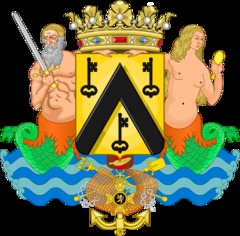
Ostend is a city in the Belgian province of West Flanders, which is located approximately centrally along the Belgian coast. The city is an important tourist and economic center, has almost 70,000 inhabitants, has a seaport and airport and is the cen  More

Oostende

Oostende

Ostend is a city in the Belgian province of West Flanders, which is approximately centrally located along the Belgian coast. The city is an important tourist and economic center, has almost 70,000 inhabitants, has a seaport and airport and is the center of the district of the same name.

The first traces of Ostend can be found in the 9th and 10th century. Shepherds and fishermen lived simple lives in a small settlement on the eastern end of Testerep Island. In 814 Sire Gobrecht van Steeland donated the then village to the abbey of Saint Bertinus in Sint-Omaars. In the 11th century, the Testerepvliet between the island and the mainland was reclaimed, so that the city was no longer on the island and could develop. In 1267 Margaret of Constantinople granted city rights to Ostend, but the city had no walls, fortresses or strongholds. At that time Ostend was granted the privilege of operating a hall. Gradually, the inhabitants made use of their administrative powers to break away from the dominant lords of the castle. A college of aldermen of wealthy merchants, later craftsmen, headed by the bailiff, mapped out the policy. In 1284, Ostend concluded a treaty with the free lord of Bruges to widen the tidal channel and make it navigable.

Storms and floods forced Ostend to move. In 1372 the city was fortified with stockades, but continuous heavy storms and floods eventually engulfed part of the city. A new city, more southerly, was built. In 1445 Philip the Good gave Ostend his permission to build a harbor. In 1447 the city was again flooded, with the result that the city was again largely relocated, further away from the sea.

In July 1489, Ostend was sacked and burned by supporters of the German king Maximilian I of Austria, led by Daniel van Praet, captain of Nieuwpoort. That initiated the series of wars in the Netherlands. Ostend was conquered in 1548 by the English and the Dutch. In 1572, a defense was finally erected around the city with the permission and cooperation of the Duke of Alva.

After the Battle of Nieuwpoort, the army of the Prince of Orange withdrew to Ostend. The people of Ostend gave free access to their harbor to Protestants from England and Northern Ireland. Ostend thus became the last Protestant stronghold in the Catholic Spanish Netherlands. In response, the three-year Siege of Ostend followed. The State defenders finally withdrew. Ostend was completely destroyed by the siege. The Noorderdijk had been cut through, causing the polders to flood and a large tidal channel was created, now the current harbor channel of Ostend.

In 1698 a first shipping company was established, the purpose of which was to trade with the Indies. The War of the Spanish Succession also had its consequences for Ostend. When the French and Spanish troops withdrew to Ostend after their loss at the Battle of Ramillies on 23 May 1706, the city was besieged by the English fleet, and again largely destroyed. On July 6, 1706, the besieged city surrendered to the Austrian Emperor and his allies.

The shipping company that traded with the Indies only became a success in 1715. On 11 August 1723, the General Imperial and Royal Indian Company, better known as the Ostend Company, was founded. In March 1724, the first merchant fleet, consisting of three ships, the Arend, the Saint Elizabeth and the Saint Charles, set sail under the royal and imperial flag. In a short time, Ostend became an important port with imports of Chinese and Indian merchandise. Under international pressure, the Ostend Company was suspended in 1727 and dissolved in 1731. Ostend is once again becoming an ordinary fortified city. In the late 17th century and first half of the 18th century, Ostend was one of the fortified towns that formed part of the Dutch fortification barrier in the Southern Netherlands.

On November 24, 1776, the first trading dock was opened. In 1781, Emperor Joseph II issued a decree that officially made Ostend a free port. Once again, the port experienced a certain revival, partly due to Austria's neutrality in the American War of Independence. After the Treaty of Versailles on January 20, 1783, major port activity began to decline again.

Between 1792 and 1815, the further expansion of the Ostend harbor was put on the back burner because of the policy of Napoleon Bonaparte. The Emperor blocked overseas trade with the Continental System and concentrated the fortifications and the activities of his navy in the Northern waters in Den Helder. However, under Napoleon's rule, two forts were built to defend the harbour: Fort Napoleon and Fort Royal were to fend off British attacks and landings.

Also during the reign (1815-1830) of King William I of the Netherlands, enlargement of the harbor was not possible.

It was not until 1830, under the impulse of the Belgian King Leopold I, that the Ostend seaport was able to expand further. The Ostend-Brussels railway was inaugurated in 1838 and the first Ostend-Dover ferry service was established in 1846. The first Ostend fish market was built in 1877. On April 2, 1884, the first steam fishing vessel arrived in Ostend.

In 1865, Ostend was relieved of its function as a fortress by the then minister of war, Baron Félix Chazal. Soon the fortress walls around the city were demolished. As a result, Ostend would expand rapidly in a short period of time. Thanks to the efforts of the Belgian King Leopold II, Ostend prospered like no other in the early twentieth century. The city was nicknamed "Queen of the seaside resorts". The fashionable king built a world-famous Belle Epoque seaside resort. The Kursaal Oostende from 1852, the new theater from 1905, the Royal Palace, the Royal Galleries, the Promenade, the Kiosk, the City Theatre, the Leopold Park, the Wellington Racetrack and the City Library radiated its bourgeois character.

Due to the increased shipping on Ostend, a shortage of quay walls had arisen. That is why the port was radically renovated in the period 1894-1914 by adapting the outer port and expanding a new inner port.

The two world wars heralded the end of Ostend as a belle époque city. The Germans placed anti-aircraft guns along Fort Napoleon and in the dunes. During the First World War, Ostend was a base for German submarines from Bruges. The British tried to block Ostend twice with a blockade. The promenade was almost completely destroyed in 1940-45 by the Allies bombing the Atlantic Wall, the harbor and the railways.

The rise of mass tourism and the real estate sector was even more dramatic than World War II for the breakdown of Belle Epoque architecture. Thanks to one-day tourism and the increase in mobility, Ostend grew into a thriving modern seaside resort with almost 70,000 inhabitants.

At the turn of the millennium, the city council of Ostend decided to get rid of the elitist nickname "Queen of seaside resorts" and to present itself as "City by the sea". The main aim was to indicate that Ostend would be one of the only "real" cities on the Belgian coast. In terms of tourism and marketing, this title was more modern.

The airport and rail port have replaced the sea port in terms of international connections.

Automatic translation Click here for the original text
Hide original text

Oostende is een stad in de Belgische provincie West-Vlaanderen, die ongeveer centraal langs de Belgische kust ligt. De stad is een belangrijk toeristisch en economisch centrum, telt bijna 70.000 inwoners, beschikt over een zee- en luchthaven en is het centrum van het gelijknamige arrondissement.

De eerste sporen van Oostende zijn te vinden in de 9e en 10e eeuw. Schaapherders en vissers leidden een eenvoudig leven in een kleine nederzetting op het oostelijke uiteinde van het eiland Testerep. In 814 schonk Sire Gobrecht van Steeland het toenmalig dorpje aan de abdij van Sint-Bertinus in Sint-Omaars. In de 11de eeuw werd de Testerepvliet tussen het eiland en het vasteland ingepolderd, waardoor stad niet meer op eiland lag en zich kon ontwikkelen. In 1267 kende Margaretha van Constantinopel stadsrechten toe aan Oostende, maar de stad had geen muren, vestingen of bolwerken. Op dat moment werd aan Oostende het voorrecht verleend een halle te exploiteren. Geleidelijk aan maakten de bewoners gebruik van hun bestuurlijke bevoegdheden om zich los te maken van de dominerende kasteelheren. Een schepencollege van rijke kooplieden, later ambachtslieden, met aan het hoofd de baljuw, stippelde het beleid uit. In 1284 sloot Oostende een verdrag met de vrijheer van Brugge om de getijdengeul te verbreden en bevaarbaar te maken.

Stormen en overstromingen dwongen Oostende te verhuizen. In 1372 werd de stad versterkt met palissades, maar voortdurende zware stormen en overstromingen verzwolgen uiteindelijk een gedeelte van de stad. Er werd een nieuwe meer zuidelijk gelegen stad opgetrokken. In 1445 gaf Filips de Goede Oostende zijn toestemming om een haven aan te leggen. In 1447 werd de stad opnieuw overstroomd, met als gevolg dat de stad opnieuw voor een groot gedeelte verplaatst werd, verder van de zee af.

In juli 1489 werd Oostende geplunderd en in brand gestoken door aanhangers van de Duitse koning Maximiliaan I van Oostenrijk, aangevoerd door Daniël van Praet, kapitein van Nieuwpoort. Dat leidde de reeks oorlogen in de Nederlanden in. Zo werd Oostende in 1548 veroverd door de Engelsen en de Hollanders. In 1572 werd uiteindelijk een verdediging rond de stad opgeworpen met de toestemming en medewerking van de Hertog van Alva.

Na de Slag bij Nieuwpoort trok het leger van de Prins van Oranje zich terug op Oostende. De Oostendenaren gaven vrije toegang tot hun haven aan protestanten uit Engeland en Noord-Ierland. Zo werd Oostende het laatste protestantse bolwerk in de katholieke Spaanse Nederlanden. Als reactie daarop volgde het drie jaar durende Beleg van Oostende. De Staatse verdedigers trokken zich ten slotte terug. Door het beleg was Oostende totaal verwoest. De Noorderdijk was doorgestoken waardoor de polders onder water liepen en een grote getijdengeul ontstond, nu de huidige havengeul van Oostende.

In 1698 werd een eerste scheepvaartmaatschappij opgericht, die tot doel had handel te drijven met Indië. De Spaanse Successieoorlog had ook zijn gevolgen voor Oostende. Toen de Franse en Spaanse troepen, na hun verlies in de slag bij Ramillies op 23 mei 1706 zich terugtrokken in Oostende, werd de stad belegerd door de Engelse vloot, en opnieuw grotendeels verwoest. Op 6 juli 1706 gaf de belegerde stad zich over aan de Oostenrijkse keizer en zijn bondgenoten.

De scheepvaartmaatschappij die met Indië handel voerde, werd pas in 1715 een succes. Op 11 augustus 1723 werd de Generale Keizerlijke en Koninklijke Indische Compagnie, beter bekend als de Oostendse Compagnie, gesticht. In maart 1724 vertrok de eerste koopvaardijvloot, die bestond uit drie schepen, de Arend, de Sint-Elisabeth en de Sint-Karel, onder koninklijke en keizerlijke vlag. Op korte tijd werd Oostende een belangrijke haven met invoer van Chinese en Indische koopwaar. Onder internationale druk werd de Oostendse Compagnie in 1727 geschorst en in 1731 opgeheven. Oostende wordt opnieuw een gewone vestingstad. In de late 17e eeuw en eerste helft van de 18de eeuw was Oostende een van de vestingsteden die deel uitmaakten van de Nederlandse vestingsbarrière in de Zuidelijke Nederlanden.

Op 24 november 1776 werd het eerste handelsdok geopend. In 1781 vaardigde keizer Jozef II een decreet uit waardoor Oostende officieel een vrijhaven werd. Opnieuw kende de haven een zekere opbloei, onder andere door de neutraliteit van Oostenrijk in de Amerikaanse Onafhankelijkheidsoorlog. Na het Verdrag van Versailles op 20 januari 1783 begon de grote havenbedrijvigheid weer af te nemen.

Tussen 1792 en 1815 stond de verdere uitbouw van de Oostendse haven op een laag pitje vanwege het beleid van Napoleon Bonaparte. De keizer blokkeerde met het Continentaal stelsel de handel met overzee en concentreerde de vestingbouw en de activiteiten van zijn marine in de Noordelijke wateren in Den Helder. Wel werden er onder het bestuur van Napoleon twee forten gebouwd ter verdediging van de haven: Fort Napoleon en het Fort Royal moesten Britse aanvallen en landingen afweren.

Ook tijdens het bewind (1815-1830) van koning Willem I der Nederlanden was vergroting van de haven niet mogelijk.

Pas in 1830, onder impuls van de Belgische koning Leopold I, kon de Oostendse zeehaven verder uitgroeien. In 1838 had de inhuldiging van de spoorlijn Oostende-Brussel plaats en in 1846 werd de eerste veerdienst Oostende-Dover ingelegd. In 1877 werd de eerste Oostendse vismijn gebouwd. Op 2 april 1884 kwam het eerste stoomvisserijschip Oostende binnenvaren.

In 1865 werd Oostende ontheven van haar functie als vesting door de toenmalige minister van oorlog baron Félix Chazal. Spoedig werden de vestingmuren rond de stad gesloopt. Hierdoor zou Oostende op korte tijd sterk uitbreiden. Dankzij de inspanningen van de Belgische koning Leopold II bloeide Oostende in het begin van de twintigste eeuw als geen ander. De stad kreeg de bijnaam "Koningin der Badsteden". De mondaine koning bouwde een belle époque-badplaats met wereldfaam. Het Kursaal Oostende uit 1852, het nieuwe theater uit 1905, het Koninklijk Paleis, de Koninklijke Gaanderijen, de Promenade, de Kiosk, het Stadstheater, het Leopoldpark, de Wellingtonrenbaan en de Stadsbibliotheek straalden haar bourgeois karakter uit.

Door de toegenomen scheepvaart op Oostende was een tekort aan kaaimuren ontstaan. Daarom werd in de periode 1894-1914 de haven op ingrijpende wijze vernieuwd door aanpassing van de voorhaven en uitbouw van een nieuwe achterhaven.

De twee wereldoorlogen luidden het einde in van Oostende als belle époquestad. De Duitsers plaatsten afweergeschutbatterijen langs het Fort Napoleon en in de duinen. In de Eerste Wereldoorlog was Oostende een basis voor Duitse duikboten vanuit Brugge. De Britten probeerden Oostende tweemaal te blokkeren met een blokkade. De promenade werd zo goed als volledig verwoest in 1940-45 door de bommenregen van de Geallieerden op de Atlantikwall, de haven en de spoorwegen.

De opkomst van het massatoerisme en de immobiliënsector waren nog dramatischer dan de Tweede Wereldoorlog voor de afbraak van de belle-epoque architectuur. Oostende groeide dankzij het eendagstoerisme en de toename van de mobiliteit uit tot een bloeiende moderne badstad met bijna 70.000 inwoners.

Tegen de millenniumwende besloot het stadsbestuur van Oostende om van de elitaire bijnaam "Koningin der badsteden" af te stappen en zich te profileren als "Stad aan zee". Men wilde daarmee vooral aangeven dat Oostende aan de Belgische kust één van de enige "echte" steden zou zijn. Toeristisch en marketinggewijs was deze titel moderner.

De lucht- en spoorhaven hebben de plaats van de zeehaven ingenomen op vlak van internationale verbindingen.


Number of stamps
112
Number of related items
0
Oldest item
Fokker F.VII over cities (1930)
Latest item
Raoul Servais (2023)
Most expensive item
Tourist Development (€ 90.00)
Date of entry:September 30, 2014 19:45by:Humphrey56
Last updated :September 30, 2014 19:45by:Humphrey56

  • 1
  • 2
  • >
112 selected
Fokker F.VII over cities
€ 
2
.
50
Fokker F.VII over cities
  • 1930
  • 50
King Albert I "with kepi"
  • 1930
  • 35
King Albert I "with kepi"
  • 1933
  • 1
Publibel 0315
Publibel 0315
  • 1935
  • 35
Plane over Belgium
Plane over Belgium
  • 1936
Ferry Service Ostend-Dover
€ 
0
.
40
Ferry Service Ostend-Dover
  • 1946
  • 1,35
Ferry Service Ostend-Dover
€ 
0
.
30
Ferry Service Ostend-Dover
  • 1946
  • 1,35
Ferry Service Ostend-Dover
€ 
0
.
40
Ferry Service Ostend-Dover
  • 1946
  • 2,25
Ferry Service Ostend-Dover
€ 
0
.
50
Ferry Service Ostend-Dover
  • 1946
  • 3,15
Ferry Service Ostend-Dover
€ 
1
.
20
Ferry Service Ostend-Dover
  • 1946
Ferry Service Ostend-Dover
  • 1946
City Coat of Arms
€ 
0
.
70
City Coat of Arms
  • 1946
  • 1,35+1,15
City Coat of Arms
€ 
16
.
00
City Coat of Arms
  • 1946
The coast
€ 
2
.
00
The coast
  • 1953
  • 80+20
Tourist Development
€ 
90
Tourist Development
  • 1953
Rotary International
€ 
0
.
30
Rotary International
  • 1954
  • 20
Rotary International
€ 
0
.
40
Rotary International
  • 1954
  • 80
Exhibition Coloniale Philatélique La Louvière
€ 
5
.
00
Exhibition Coloniale Philatélique La Louvière
  • 1955
Millennium of Ostend
€ 
0
.
30
Millennium of Ostend
  • 1964
  • 3
Millennium of Ostend
€ 
2
.
00
Millennium of Ostend
  • 1964
Millennium of Ostend
  • 1964
Millennium of Ostend
€ 
2
.
00
Millennium of Ostend
  • 1964
Millennium of Ostend
€ 
2
.
00
Millennium of Ostend
  • 1964
Jubilee city rights to Ostend
€ 
0
.
30
Jubilee city rights to Ostend
  • 1967
  • 2
Jubilee city rights to Ostend
€ 
2
.
20
Jubilee city rights to Ostend
  • 1967
Jubilee city rights to Ostend
  • 1967
Jubilee city rights to Ostend
  • 1967
Ostend
Ostend
  • 1967
Jubilee city rights to Ostend
€ 
2
.
20
Jubilee city rights to Ostend
  • 1967
Jubilee city rights to Ostend
€ 
0
.
40
Jubilee city rights to Ostend
  • 1967
Jubilee city rights to Ostend
  • 1967
British postal strike 1971 Canal service Dover-Ostend
  • 1971
  • 2/6
Postal strike 1971 Channel Ferry Dover-Oostend
  • 1971
  • 3/6
British postal strike 1971 Canal service Dover-Ostend
  • 1971
  • 5/-
Postal strike 1971 Channel Ferry Dover-Oostend
€ 
70
Postal strike 1971 Channel Ferry Dover-Oostend
  • 1971
British postal strike 1971 Canal service Dover-Ostend
€ 
70
British postal strike 1971 Canal service Dover-Ostend
  • 1971
British postal strike 1971 Canal service Dover-Ostend
€ 
70
British postal strike 1971 Canal service Dover-Ostend
  • 1971
Oostende Railway Station
€ 
1
.
60
Oostende Railway Station
  • 1971
  • 32
Oostende Railway Station
€ 
14
.
00
Oostende Railway Station
  • 1971
  • 37
Oostende Railway Station
€ 
2
.
40
Oostende Railway Station
  • 1971
  • 42
Oostende Railway Station
€ 
2
.
40
Oostende Railway Station
  • 1971
  • 44
Oostende Railway Station
€ 
2
.
40
Oostende Railway Station
  • 1971
  • 46
Oostende Railway Station
€ 
2
.
40
Oostende Railway Station
  • 1971
  • 50
Oostende Railway Station
€ 
14
.
00
Oostende Railway Station
  • 1971
  • 52
Oostende Railway Station
€ 
6
.
50
Oostende Railway Station
  • 1971
  • 54
Oostende Railway Station
€ 
3
.
80
Oostende Railway Station
  • 1971
  • 61
Oostende Railway Station
€ 
48
Oostende Railway Station
  • 1971
Oostende Railway Station
€ 
13
.
00
Oostende Railway Station
  • 1971
  • 37
Oostende Railway Station
€ 
2
.
20
Oostende Railway Station
  • 1971
  • 46
Oostende Railway Station
€ 
14
.
00
Oostende Railway Station
  • 1971
  • 52
Oostende Railway Station
€ 
5
.
50
Oostende Railway Station
  • 1971
  • 54
Oostende Railway Station
€ 
46
Oostende Railway Station
  • 1971
Oostende Railway Station
  • 1971
Oostende Railway Station, with overprint
€ 
2
.
80
Oostende Railway Station, with overprint
  • 1971
  • 34#32
Oostende Railway Station, with overprint
€ 
2
.
80
Oostende Railway Station, with overprint
  • 1971
  • 40#37
Oostende Railway Station, with overprint
€ 
2
.
80
Oostende Railway Station, with overprint
  • 1971
  • 47#44
Oostende Railway Station, with overprint
€ 
3
.
40
Oostende Railway Station, with overprint
  • 1971
  • 53#42
Oostende Railway Station, with overprint
€ 
3
.
40
Oostende Railway Station, with overprint
  • 1971
  • 56#52
Oostende Railway Station, with overprint
€ 
3
.
40
Oostende Railway Station, with overprint
  • 1971
  • 59#54
Oostende Railway Station, with overprint
€ 
4
.
00
Oostende Railway Station, with overprint
  • 1971
  • 66#61
  • Get to know us
  • About LastDodo
  • Catalogue
  • Buy
  • Sell
  • Subscriptions
  • Help
  • How does it work?
  • Frequently Asked Questions
  • Contact
  • Forum
  • Return and refund policy
  • Explore
  • Stamps buy and sell
  • Comic books buy and sell
  • Coins buy and sell
  • Books buy and sell
  • Music buy and sell
  • Film buy and sell
  • Postcards buy and sell
  • Trading cards buy and sell
  • Cigar bands buy and sell
  • Model cars buy and sell
© 2026 LastDodo
Terms of usePrivacy policyCookie policy