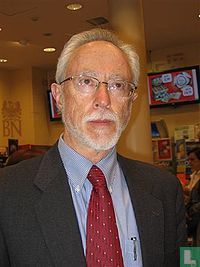
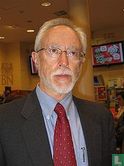
John Maxwell Coetzee, born John Michael Coetzee (Cape Town, February 9, 1940) is a South African writer. He later changed his baptismal name. On October 2, 2003, he was awarded the Nobel Prize in Literature. He was the second South African writer to receive this honor. The prize was presented to him on December 10 in Stockholm.
Lifecycle:
The ancestry of Coetzee mainly consists of 17th century Dutch people who emigrated to South Africa. He also has some Polish ancestors.
He studied Mathematics and English at the University of Cape Town. In the early 1960s he moved to Great Britain, where he worked as a computer programmer. His experiences were later incorporated into the book Youth (2002). He then studied literature at the University of Texas at Austin and then taught English at the University of Buffalo (New York State University) until 1983.
In 1984 Coetzee returned to South Africa. He became a professor of English at the University of Cape Town and retired there in 2002. He then moved to Adelaide (Australia), where he was appointed honorary researcher at the Faculty of English at the University of Adelaide. Since 2002 he has also been a professor at the University of Chicago. On March 6, 2006 he became an Australian citizen.
Coetzee has written several novels, in which the theme of the loner who has to survive within a group keeps returning. He also worked as a translator and has published a number of reviews. In 1976, Coetzee translated Marcellus Emants's novel A Bequeathed Confession into English. In addition, Coetzee regularly gives his opinion on animal rights in his books and in the media. Coetzee was also a fierce opponent of apartheid.
He was the first writer to win the Booker Prize twice, in 1983 for The Life and Times of Michael K and in 1999 for Disgrace. Because he wanted to avoid the publicity about the prices, he did not come to collect the prices.
Elizabeth Costello, a fictional Australian writer, serves as his alter-ego in three of his novels: Elizabeth Costello (2003), The Lives of Animals (1999) and Slow Man (2005).
To work:
Dusklands (1974)
In the Heart of the Country (1977)
Waiting for the Barbarians (1980)
The Life and Times of Michael K (1983)
Foe (1986)
White Writing: On the Culture of Letters in South Africa (1988)
Age of Iron (1990)
Doubling the Point: Essays and Interviews (1992)
The Master of Petersburg (1994)
Giving Offense: Essays on Censorship (1996)
Boyhood: Scenes from Provincial Life (1998)
The Life of Animals (1999)
Disgrace (1999)
Youth (2002)
Stranger Shores: Literary Essays, 1986-1999 (2002)
Elizabeth Costello (2003)
Landscape with Rowers: Poetry from the Netherlands (2003)
Slow Man (2005)
Diary of a Bad Year (2007)
Translations:
World & Walk of Michael K (1984)
In the Heart of the Country (1985)
Twilight Lands (1986)
Iron Age (1990 - later released under the title Iron Age)
The Master from Petersburg (1994)
Boyhood (1997)
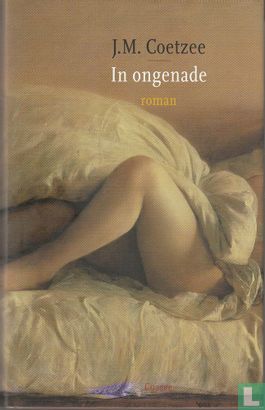
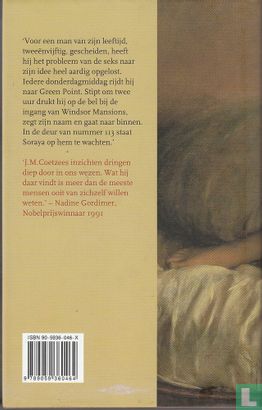
In Disgrace (1999)
Animal Life (2001)
Portrait of a Young Man (2002)
Waiting for the Barbarians (2002)
Elizabeth Costello (2003)
Mr. Foe and Mrs. Barton (2003)
He and His Husband (With an answer from Arnon Grunberg - 2004)
Slow Man (2005)
Diary of a Bad Year (2007)
What is a classic novel? (essay - 2007)
When a Woman Gets Older (2008)
In 2003 he published the bilingual anthology Landscape with Rowers: Poetry from the Netherlands at Princeton University Press, with a selection from the work of successively Gerrit Achterberg, Sybren Polet, Hugo Claus, Cees Nooteboom, Hans Faverey and Rutger Kopland.
This text has been translated automatically from Dutch
Click here for the original text
John Maxwell Coetzee, geboren als John Michael Coetzee (Kaapstad, 9 februari 1940) is een Zuid-Afrikaans schrijver. Hij heeft later zijn doopnaam veranderd. Op 2 oktober 2003 werd hem de Nobelprijs voor de Literatuur toegekend. Hij was de tweede Zuid-Afrikaanse schrijver die deze eer ten deel viel. De prijs werd op 10 december in Stockholm aan hem uitgereikt.
Levensloop:
Het voorgeslacht van Coetzee bestaat voor het merendeel uit naar Zuid-Afrika geëmigreerde 17e eeuwse Nederlanders. Daarnaast heeft hij ook enige Poolse voorouders.
Hij studeerde wiskunde en Engels aan de Universiteit van Kaapstad. Begin jaren zestig verhuisde hij naar Groot-Brittannië, waar hij werkte als computerprogrammeur. Zijn ervaringen werden later verwerkt in het boek Youth (2002). Daarna studeerde hij literatuur aan de Universiteit van Texas in Austin en doceerde vervolgens tot 1983 Engels aan de Universiteit van Buffalo (Staatsuniversiteit van New York).
In 1984 keerde Coetzee terug naar Zuid-Afrika. Hij werd hoogleraar Engels aan de Universiteit van Kaapstad en ging daar in 2002 met pensioen. Vervolgens verhuisde hij naar Adelaide (Australië), waar hij een ereaanstelling kreeg als onderzoeker aan de faculteit Engels van de Universiteit van Adelaide. Sinds 2002 is hij eveneens professor aan de Universiteit van Chicago. Op 6 maart 2006 werd hij Australisch staatsburger.
Coetzee schreef diverse romans, waarin steeds het thema terugkeert van de eenling die zich staande moet zien te houden binnen een groep. Daarnaast werkte hij als vertaler en heeft hij een aantal kritieken gepubliceerd. In 1976 vertaalde Coetzee de roman Een nagelaten bekentenis van Marcellus Emants in het Engels. Daarnaast geeft Coetzee in zijn boeken en in de media regelmatig zijn mening over dierenrechten. Ook was Coetzee een fel tegenstander van apartheid.
Hij was de eerste schrijver die tweemaal de Booker Prize won, in 1983 voor The Life and Times of Michael K en in 1999 voor Disgrace. Omdat hij de publiciteit omtrent de prijzen wilde mijden, kwam hij de prijzen niet ophalen.
Elizabeth Costello, een fictieve Australische schrijfster, fungeert als zijn alterego in drie van zijn romans: Elizabeth Costello (2003), The Lives of Animals (1999) en Slow Man(2005).
Werken:
Dusklands (1974)
In the Heart of the Country (1977)
Waiting for the Barbarians (1980)
The Life and Times of Michael K (1983)
Foe (1986)
White Writing: On the Culture of Letters in South Africa (1988)
Age of Iron (1990)
Doubling the Point: Essays and Interviews (1992)
The Master of Petersburg (1994)
Giving Offense: Essays on Censorship (1996)
Boyhood: Scenes from Provincial Life (1998)
The Life of Animals (1999)
Disgrace (1999)
Youth (2002)
Stranger Shores: Literary Essays, 1986-1999 (2002)
Elizabeth Costello (2003)
Landscape with Rowers: Poetry from the Netherlands (2003)
Slow Man (2005)
Diary of a Bad Year (2007)
Vertalingen:
Wereld & wandel van Michael K (1984)
In het hart van het land (1985)
Schemerlanden (1986)
IJzertijd (1990 - later verschenen onder de titel IJzeren tijd)
De meester van Petersburg (1994)
Jongensjaren (1997)
In ongenade (1999)
Dierenleven (2001)
Portret van een jongeman (2002)
Wachten op de barbaren (2002)
Elizabeth Costello (2003)
Mr.Foe en Mrs. Barton (2003)
Hij en zijn man (Met een antwoord van Arnon Grunberg - 2004)
Langzame man (2005)
Dagboek van een slecht jaar (2007)
Wat is een klassieke roman? (essay - 2007)
Als een vrouw ouder wordt (2008)
In 2003 publiceerde hij bij Princeton University Press de tweetalige anthologie Landschape with Rowers: Poetry from the Netherlands, met daarin een keuze uit het werk van achtereenvolgens Gerrit Achterberg, Sybren Polet, Hugo Claus, Cees Nooteboom, Hans Faverey en Rutger Kopland.