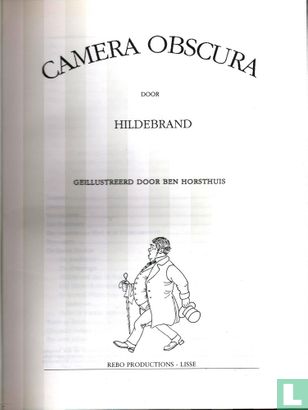
The Camera Obscura has been a popular book from the start. Nevertheless, an anonymous reviewer in 1840 and E. Potgieter in 1841 find it necessary to devote a critical review to the Camera Obscura. The biggest problem they have with the book is the description of reality in the book. It remains with description and has no message for the reader. Despite the talent that Nicolaas Beets has according to both reviewers, he uses this incorrectly and that is why his book gets a negative rating. However, sentiment quickly turned and from the 1950s onwards, people only wrote positively about the book. The illustrations that are added are the subject of discussion, but the book has an almost untouchable status. The number of arguments used to reach a positive conclusion is declining. Around 1900, various reviews even appear in which no argument is presented to support a positive judgment. This situation lasted until 1910, when Albert Verwey wrote a review attacking the Camera Obscura's status as a folk book. From that moment on, the way in which Hildebrand's book is written changes. A process that had already begun cautiously at the end of the nineteenth century is now continuing: the reviews are becoming increasingly close to the reprint that prompted them to appear. A scientific reprint is published in 1998. Ten years later, in 2008, a contemporary revision by Ivo de Wijs is published. The spelling has been modernized, long-winded passages (for modern readers) have been shortened and major changes have been made in some places, whereby (parts of) chapters have been deleted in some cases. Opinions are divided about these interventions: according to enthusiasts, the modernisations are too drastic and affect the old character and the era. Source: Wikipedia
This text has been translated automatically from Dutch
Click here for the original text
De Camera Obscura is van meet af aan een populair boek geweest. Toch vinden een anonieme recensent in 1840 en E. Potgieter in 1841 het nodig een kritische bespreking te wijden aan de Camera Obscura. Het grootste probleem dat zij met het boek hebben is de werkelijkheidsbeschrijving in het boek. Het blijft bij beschrijven en kent geen enkele boodschap voor de lezer. Ondanks het talent dat Nicolaas Beets volgens beide recensenten heeft, zet hij dit verkeerd in en daarom krijgt zijn boek een negatieve beoordeling. Het sentiment slaat echter al snel om en vanaf de jaren ’50 van de negentiende eeuw schrijft men enkel nog positief over het boek. De illustraties die worden toegevoegd zijn wel onderwerp van discussie, maar het boek heeft een bijna onaantastbare status. Het aantal argumenten dat wordt gebruikt om tot een positief oordeel te komen loopt terug. Rond 1900 verschijnen er zelfs diverse recensies waarin geen enkel argument wordt aangedragen om een positief oordeel te onderbouwen. Deze situatie duurt voort tot 1910, wanneer Albert Verwey een recensie schrijft waarin hij de status van de Camera Obscura als volksboek aanvalt. Vanaf dat moment verandert de manier waarop er wordt geschreven over Hildebrands boek. Een proces dat eind negentiende eeuw al voorzichtig was begonnen zet nu door: de recensies gaan steeds nauwer aansluiten bij de herdruk naar aanleiding waarvan ze verschijnen. In 1998 verschijnt een wetenschappelijke herdruk. Tien jaar later, in 2008, verschijnt een eigentijdse hertaling van de hand van Ivo de Wijs. Daarin is de spelling gemoderniseerd, zijn (voor de moderne lezers) langdradige passages ingekort en zijn er op sommige plaatsen forse ingrepen gedaan waarbij in enkele gevallen (delen van) hoofdstukken zijn komen te vervallen. Over deze ingrepen zijn de meningen verdeeld: volgens liefhebbers zijn de moderniseringen te ingrijpend en tasten ze het oude karakter en het tijdsbeeld aan. Bron: Wikipedia